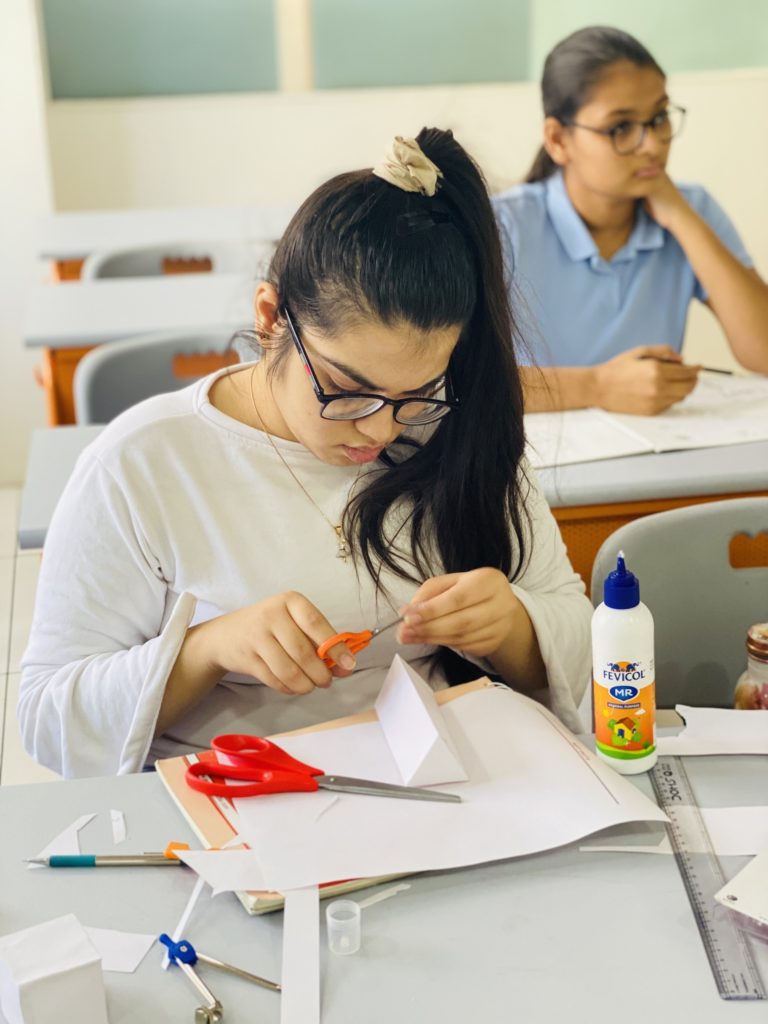
 Q. How was the NIFT 2021 Exam? Was it lengthy, difficult or moderate? What’s your analysis of the exam?
The paper pattern of NIFT B.des entrance paper didn’t see any changes. The paper format and the number of questions were in accordance with the announced NIFT exam pattern with the difficulty levels being moderate, all in all the paper was quite doable for any consistent student. There were six passages, each passage of around 120-150 words, they were small and weren’t time consuming in reading, however comprehending was more on an inference-based questions, which was little tricky for the students. Student with a good reading habit will surely find it easily doable. the topic based was on varied subjects, ranging from opera, music and art fair, aquatic animal to weirdest profession, other section of English was easy to moderate, the easiest being to identify the plural form, same was with one-word substitution and to identify the correct spelt word, idioms and phrase was moderate and same with antonyms and synonyms
Reasoning had mix of topics like Assertion and reason, puzzles which was little time taking but doable, other topics of cubes, series, Odd ones out, blood relations, directions, coding decoding, ranking & positioning could be attempted carefully.
Quantitative on the other hand saw all major topics covered from number system to ratio & proportion, SI, CI, profit & loss, work time, mixtures & allegations, etc.
The General knowledge segment was moderately easy with questions which has question three questions from brands, two questions on noble prize and four questions from static GK everything that we have been recommending and mentoring for found its presence in the exam. It will be fit to say that there were no surprises.
GAT section was not at all lengthy , 100 questions could be comfortably attempted in allotted time .If all the sections were attempted properly any score above 65-70/100 could be easily achieved
Q. Creative Ability Test is conducted to judge the Design Ability and Creativity of the student. Out of the three questions asked in the NIFT exam, which one required the most efforts and was the easiest?
Analysis of question is very important and also its imperative to understand what the examiner wants , In CAT this year too there were three questions to attempt. Two were from visual communication and the third was a creative product representation based.
Question No 1: “Design a virtual space for Webinar”.
This was for some tricky but at the same time a little brain storming could have gave students edge, as everyone is now well versed with EdTech platforms like Zoom ,Google meet ,Go to meeting etc. thanks to COVID 19 , we all had learning /interactions/meetings on these
platforms ,the question demanded to design a hypothetical digital meeting / learning platform and not the one that already exist as question was not on Re-design ,it was altogether about design a new interface display ,wherein student had the liberty to coin new brand ,slogan as well as its logo altogether. Reading the question properly and inferring it, was the key , as some students even ended up drawing a physical recording studio for webinar. That’s why it’s not about “How you draw’ but it’s all about “what you draw “
Q2: Design Emojis for the following:
(a) see you again (b) I don’t know (c) good morning (d) good night (e) sh…
It was again a visual communication question, where emojis for different communication has to be designed, one need to be very particular and avoid drawing the same circular shaped emoji, instead define, what is emoji ,it’s basically a visual which interpret a message or a communication , many of students would have interpreted it only as emoji face , which is very conventional.
This was the most easiest question in CAT but at the same time your creativity is being judged ,
how much you think “ out of the box”
Q3: choose any musical instrument and depict any four festivals each in a given box.
The challenge in any design exam is “ what you interpret” from the question.
There was clear instructions to innovate, design, change shape, colour, pattern of the instrument. Students were confused as to whether they had to choose one instrument and interpret it for four different festivals differently or four different instruments has to be used for each festival separately. Since the instrument could be completely renovated in terms of its
shape and form as well, it would be very interesting to see one instrument take four completely different forms. Ideally musical instrument is classified by the method of producing sound i.e. . Wind instrument, stringed instrument , percussion instrument etc . so ideally the question demands using a musical instrument type for different festivals, so if you choose string instruments then it could be guitar, violin, sitar and harp for different festival.
Knowledge on musical instrument as well as festival was the key , this question can be a decider for range of marks the students are expecting in their CAT part.
Q. Which were the toughest sections in the NIFT 2021 General Ability Test (GAT)?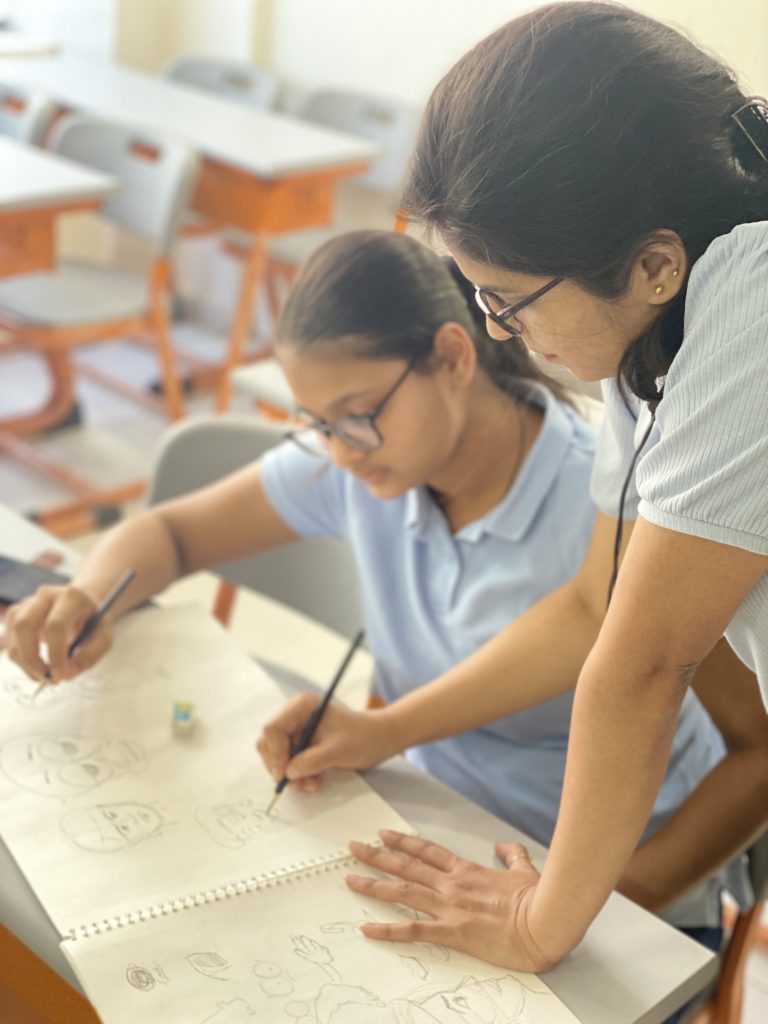
Students found quantitative section tough as compared to other sections in GAT, this year the questions were more on application based rather than on implied basis, it was little time taking as one need to apply their understanding of the topic. Questions were from average, percentage, time & speed, S.I & C.I, Profit & loss, Ratio proportion and Number system.
Q. Was there anything unexpected in the NIFT Entrance Exam? If yes, then what was it?
Not at all, there was nothing unexpected as such, it was in line with what NIFT had notified in their notification
Q. How should students prepare for the Situation Test? What are important aspects they must keep in mind?
After student clears the CAT and GAT exam (CAT 50% and GAT 30%) weightage is given to this test, NIFT situation test is conducted (20% weightage). It is to evaluate the candidate’s skills for material handling and innovative ability in a given situation with a provided set of materials. Candidates must know how to crack NIFT situation test as their admission also based on the performance in the situation test which is the final round of the admission process. A total of 3038 seats across Bachelor of Design (B.Des.) programmes will be offered admission to the
shortlisted candidates across the across 16 campuses of the NIFT institute.
The following are the key to do for NIFT Situation test.
1- Make yourself familiar with materials, materials could be anything that you usually find
at your home i.e. Plastic (bags, bottles, packaging, utensils), Cloth fabrics, strings ( jute, rubber bands, plastic etc.) ,scarp metals, needles & threads ,different papers etc
2- Always learn and practice in group especially in classroom , as there will be lots and lots
of brainstorming ,boosting your ideations and creativity
3- Exchange thoughts, ideas with your mentor and also be very open to learning.
4- Explore unconventional use of materials, handling them effectively and productively is something requires time, so start your Situation test preparation early.
Its very important to acknowledge that situation test will definitely a key to boost up the ranking, and getting top NIFT Campus is altogether based on your ranking. even a small difference in marks , creates a wide gap in the ranking . so take the situation test very “ SERIOUSLY “
Q. According to you, when must a NIFT aspirant start preparing to get the best results?
Start early, stay ahead with your strategy and make a Strategic plan to get an edge over others. Successful are those who knows what they are meant for, where is their interest & which field they are passionate about. Once you make yourself clear that your goal is to pursue art &
design as a career devise productive time management strategies with a view of acing the NIFT
exam with good rank.
Ideally it is recommended that one should start preparation at high school level , but do not assume it to be mandatory , as NIFT exam is all about your ability to effectively execute your ideas and creativity in a piece of paper ,so first identify your existing skill set and what level you need to take these skill sets to score good ranking in exam . as your school grades are not indicator of these skill sets , so it becomes imperative for NIFT aspirants to choose a mentor & guide, who would actually identify your skill set and at the same time hone up the your own set of competencies.

 Dear Parent/Student,
 So, before you say YES to join the fascinating field of design, do visit www.codevgu.in and experience a redefined Design Education.
 Fashion and Animation tops comparative student enrollment within design. Animation is growing at a very fast rate primarily for two reasons. The first reason is establishment of animation as a viable career option and second being the abundance availability of animation education in cities of all sizes. Similarly for Fashion Design it is the availability of instruction in this area in all geographies. Fashion and Animation has seen a tremendous growth in urban and semi urban areas where institutes are offering certificate and diploma courses ranging from 3 months duration to 2 years. Many of these institutes are franchises of major institutes. Fashion Design is offered as a 3 year / 4 year Bachelors Degree program by many universities and is also offered as a 3 year diploma course post 10 years of school education.