 NATA measures the aptitude of the applicant for specific field of study, i.e. Architecture, through assessment of cognitive skills, visual perception and aesthetic sensitivity tests, logical reasoning and critical thinking ability, etc., besides the learning that the candidate has acquired over the past few years and is related to the specific field of study.
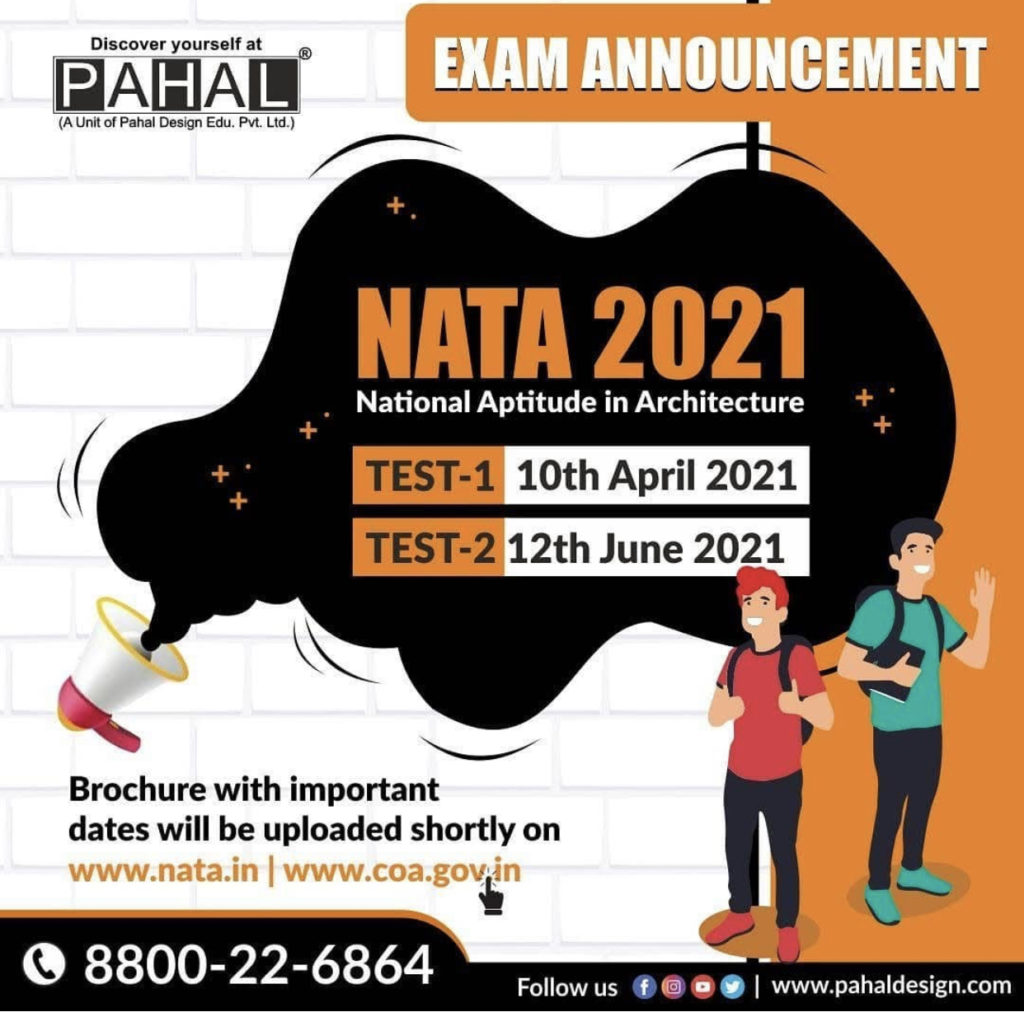
With the objective of giving opportunities to a greater number of bright aspirants, Council will be conducting NATA- 2021 for admission to B.Arch. in the academic session 2021- 2022 twice this year. Candidates who miss out the first test due to some reason or other or wish to improve upon their NATA score can register for the second test. Both the first and second test will be conducted on different dates as computer-based examinations and a candidate shall be allowed to appear for NATA 2021 for a maximum of two times.
Outline of Aptitude Test
The aptitude test will comprise of questions that could be of the Multiple-Choice type (MCQ), Multiple Select type (MSQ), Preferential Choice type (PCQ) and Numerical Answer type (NAQ).
The questions will carry either 1 mark,2 marks or 3 marks and 125 questions have to be answered in 180 minutes.
The medium of Aptitude test will be the English language.
The aptitude of the candidate will be assessed using some or all of the following techniques:
-
- Diagrammatic Reasoning – Tests the ability of logical reasoning, using diagrams and scenarios
- Numerical Reasoning – Tests mathematical ability through simple problems
- Verbal Reasoning – Assesses the ability to assess verbal logic.
- Inductive Reasoning – Tests the ability to see patterns and analyse given data
- Situational Judgment – Tests problem-solving ability.
- Logical Reasoning – Tests ability to recognise patterns, sequences or relationships between shapes and
imagery.
Abstract Reasoning – Will assess general knowledge, and ability to utilise knowledge in new situations.
 Questions could be asked in various topics that assess candidates on basic concepts in mathematics, physics and geometry, language and interpretation, elements and principles of design, aesthetic sensitivity, colour theory, lateral thinking and logical reasoning, visual perception and cognition, graphics and imagery, building anatomy and architectural vocabulary, basic techniques of building construction and knowledge of material, general knowledge and current affairs, etc. and are may not be limited to those outlined.
- Candidates who have completed their 10 + 2 examination with Physics, Chemistry and Mathematics or 10+ 3 Diploma with Mathematics as subject of study can appear for NATA 2021. Candidates appearing for 10+2 examination with Physics, Chemistry and Mathematics as subjects of study or 10+3 Diploma with Mathematics in the current year may also provisionally appear for NATA-2021.
-
Candidates may note that NATA 2021 is the qualifier for admission to B.Arch. program offered by Universities/ Institutions in the country, subject to the fulfillment of eligibility criteria as prescribed by the Council.
QUALIFYING IN NATA- 2021 DOES NOT CONSTITUTE A RIGHT/ GUARANTEE IN FAVOUR OF THE CANDIDATE FOR ADMISSION TO ANY ARCHITECTURE COURSE UNLESS THE CANDIDATE HAS FULFILLED ALL THE PRESCRIBED REQUIREMENTS AS SPECIFIED BY RESPECTIVE COMPETENT AUTHORITIES IN COMPLIANCE WITH THE ELIGIBILIY CRITERIA LAID DOWN BY THE COUNCIL.
AHMEDABAD (Drive-in-Road)Address:- 9, 1st Floor, Sunrise Centre-II, Sunrise Park, Bodakdev,
Ahmedabad, Gujarat-380015
Landmark: Off Drive-in-Road
Contact No: 78029-49620, 079-40398630
Contact Person: Ms Manisha Malkani
Email: ahmedabad@pahaldesign.com

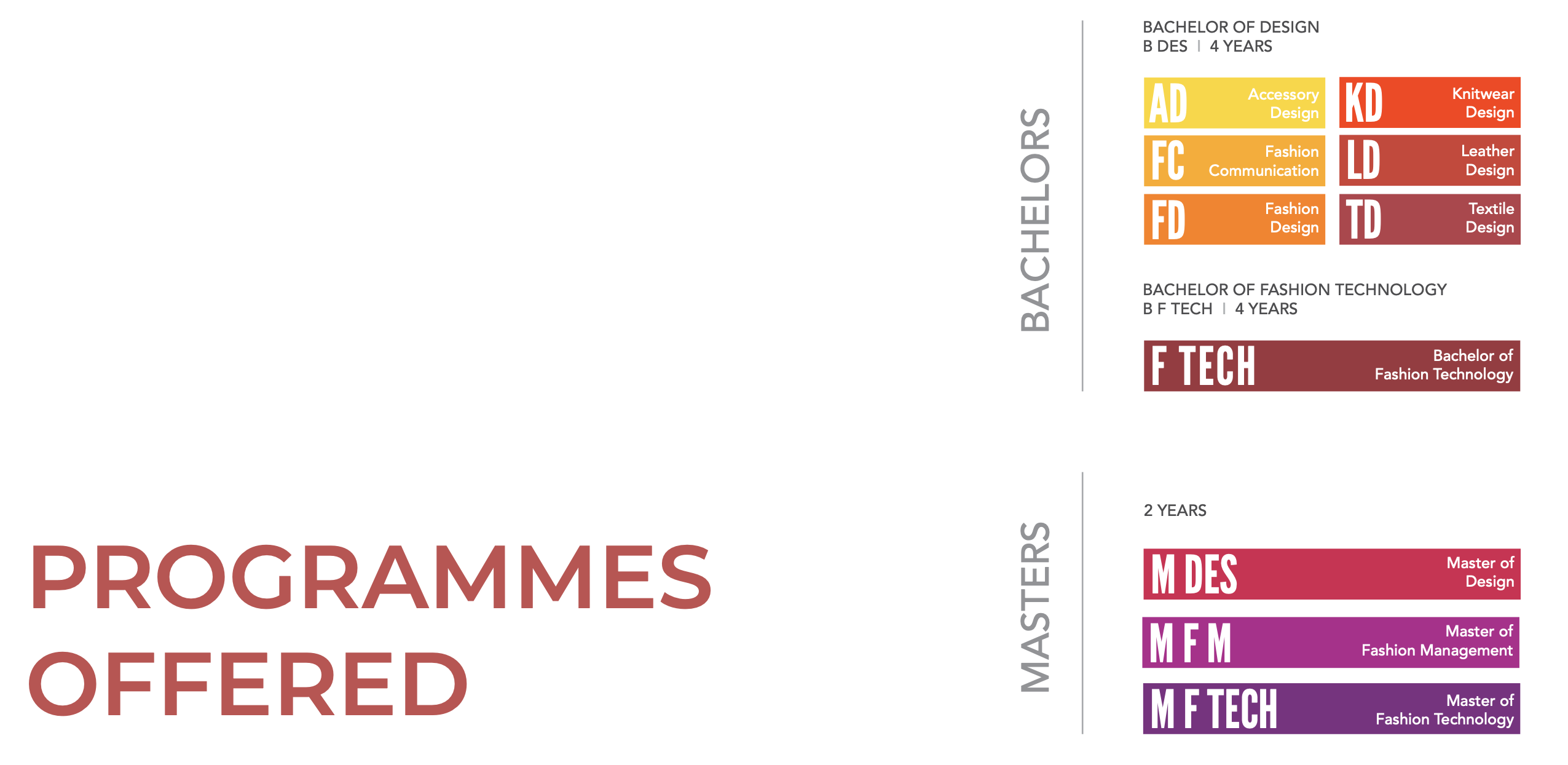
 Set up in 1986, NIFT is the pioneering institute of fashion education in the country and has been in the vanguard of providing professional human resource to the textile and apparel industry. It was made a statutory institute in 2006 by an Act of the Indian Parliament with the President of India as ‘Visitor’ and has full-fledged campuses all across the country. Over the years NIFT has also been working as a knowledge service provider to the Union and State governments in the area of design development and positioning of handlooms and handicrafts.
 meritorious NIFT students to obtain Dual Degree from both NIFT and FIT. Students from NIFT undertake two years study at the home Institute intercepted by one year of study at FIT. Thereafter, the students resume their studies at NIFT to obtain the Dual Degree from both the institutes.