Q. How was the NIFT 2021 Exam? Was it lengthy, difficult or moderate? What’s your analysis of the exam?

The paper pattern of NIFT B.des entrance paper didn’t see any changes. The paper format and the number of questions were in accordance with the announced NIFT exam pattern with the difficulty levels being moderate, all in all the paper was quite doable for any consistent student. There were six passages, each passage of around 120-150 words, they were small and weren’t time consuming in reading, however comprehending was more on an inference-based questions, which was little tricky for the students. Student with a good reading habit will surely find it easily doable. the topic based was on varied subjects, ranging from opera, music and art fair, aquatic animal to weirdest profession, other section of English was easy to moderate, the easiest being to identify the plural form, same was with one-word substitution and to identify the correct spelt word, idioms and phrase was moderate and same with antonyms and synonyms

Reasoning had mix of topics like Assertion and reason, puzzles which was little time taking but doable, other topics of cubes, series, Odd ones out, blood relations, directions, coding decoding, ranking & positioning could be attempted carefully.

Quantitative on the other hand saw all major topics covered from number system to ratio & proportion, SI, CI, profit & loss, work time, mixtures & allegations, etc.

The General knowledge segment was moderately easy with questions which has question three questions from brands, two questions on noble prize and four questions from static GK everything that we have been recommending and mentoring for found its presence in the exam. It will be fit to say that there were no surprises.

GAT section was not at all lengthy , 100 questions could be comfortably attempted in allotted time .If all the sections were attempted properly any score above 65-70/100 could be easily achieved

Q. Creative Ability Test is conducted to judge the Design Ability and Creativity of the student. Out of the three questions asked in the NIFT exam, which one required the most efforts and was the easiest?

Analysis of question is very important and also its imperative to understand what the examiner wants , In CAT this year too there were three questions to attempt. Two were from visual communication and the third was a creative product representation based.

Question No 1: “Design a virtual space for Webinar”.
This was for some tricky but at the same time a little brain storming could have gave students edge, as everyone is now well versed with EdTech platforms like Zoom ,Google meet ,Go to meeting etc. thanks to COVID 19 , we all had learning /interactions/meetings on these

platforms ,the question demanded to design a hypothetical digital meeting / learning platform and not the one that already exist as question was not on Re-design ,it was altogether about design a new interface display ,wherein student had the liberty to coin new brand ,slogan as well as its logo altogether. Reading the question properly and inferring it, was the key , as some students even ended up drawing a physical recording studio for webinar. That’s why it’s not about “How you draw’ but it’s all about “what you draw “

Q2: Design Emojis for the following:
(a) see you again (b) I don’t know (c) good morning (d) good night (e) sh…

It was again a visual communication question, where emojis for different communication has to be designed, one need to be very particular and avoid drawing the same circular shaped emoji, instead define, what is emoji ,it’s basically a visual which interpret a message or a communication , many of students would have interpreted it only as emoji face , which is very conventional.

This was the most easiest question in CAT but at the same time your creativity is being judged ,
how much you think “ out of the box”

Q3: choose any musical instrument and depict any four festivals each in a given box.

The challenge in any design exam is “ what you interpret” from the question.
There was clear instructions to innovate, design, change shape, colour, pattern of the instrument. Students were confused as to whether they had to choose one instrument and interpret it for four different festivals differently or four different instruments has to be used for each festival separately. Since the instrument could be completely renovated in terms of its
shape and form as well, it would be very interesting to see one instrument take four completely different forms. Ideally musical instrument is classified by the method of producing sound i.e. . Wind instrument, stringed instrument , percussion instrument etc . so ideally the question demands using a musical instrument type for different festivals, so if you choose string instruments then it could be guitar, violin, sitar and harp for different festival.

Knowledge on musical instrument as well as festival was the key , this question can be a decider for range of marks the students are expecting in their CAT part.

Q. Which were the toughest sections in the NIFT 2021 General Ability Test (GAT)?
Students found quantitative section tough as compared to other sections in GAT, this year the questions were more on application based rather than on implied basis, it was little time taking as one need to apply their understanding of the topic. Questions were from average, percentage, time & speed, S.I & C.I, Profit & loss, Ratio proportion and Number system.

Q. Was there anything unexpected in the NIFT Entrance Exam? If yes, then what was it?

Not at all, there was nothing unexpected as such, it was in line with what NIFT had notified in their notification

Q. How should students prepare for the Situation Test? What are important aspects they must keep in mind?

After student clears the CAT and GAT exam (CAT 50% and GAT 30%) weightage is given to this test, NIFT situation test is conducted (20% weightage). It is to evaluate the candidate’s skills for material handling and innovative ability in a given situation with a provided set of materials. Candidates must know how to crack NIFT situation test as their admission also based on the performance in the situation test which is the final round of the admission process. A total of 3038 seats across Bachelor of Design (B.Des.) programmes will be offered admission to the
shortlisted candidates across the across 16 campuses of the NIFT institute.

The following are the key to do for NIFT Situation test.
1- Make yourself familiar with materials, materials could be anything that you usually find
at your home i.e. Plastic (bags, bottles, packaging, utensils), Cloth fabrics, strings ( jute, rubber bands, plastic etc.) ,scarp metals, needles & threads ,different papers etc
2- Always learn and practice in group especially in classroom , as there will be lots and lots
of brainstorming ,boosting your ideations and creativity
3- Exchange thoughts, ideas with your mentor and also be very open to learning.
4- Explore unconventional use of materials, handling them effectively and productively is something requires time, so start your Situation test preparation early.

Its very important to acknowledge that situation test will definitely a key to boost up the ranking, and getting top NIFT Campus is altogether based on your ranking. even a small difference in marks , creates a wide gap in the ranking . so take the situation test very “ SERIOUSLY “

Q. According to you, when must a NIFT aspirant start preparing to get the best results?

Start early, stay ahead with your strategy and make a Strategic plan to get an edge over others. Successful are those who knows what they are meant for, where is their interest & which field they are passionate about. Once you make yourself clear that your goal is to pursue art &
design as a career devise productive time management strategies with a view of acing the NIFT
exam with good rank.

Ideally it is recommended that one should start preparation at high school level , but do not assume it to be mandatory , as NIFT exam is all about your ability to effectively execute your ideas and creativity in a piece of paper ,so first identify your existing skill set and what level you need to take these skill sets to score good ranking in exam . as your school grades are not indicator of these skill sets , so it becomes imperative for NIFT aspirants to choose a mentor & guide, who would actually identify your skill set and at the same time hone up the your own set of competencies.
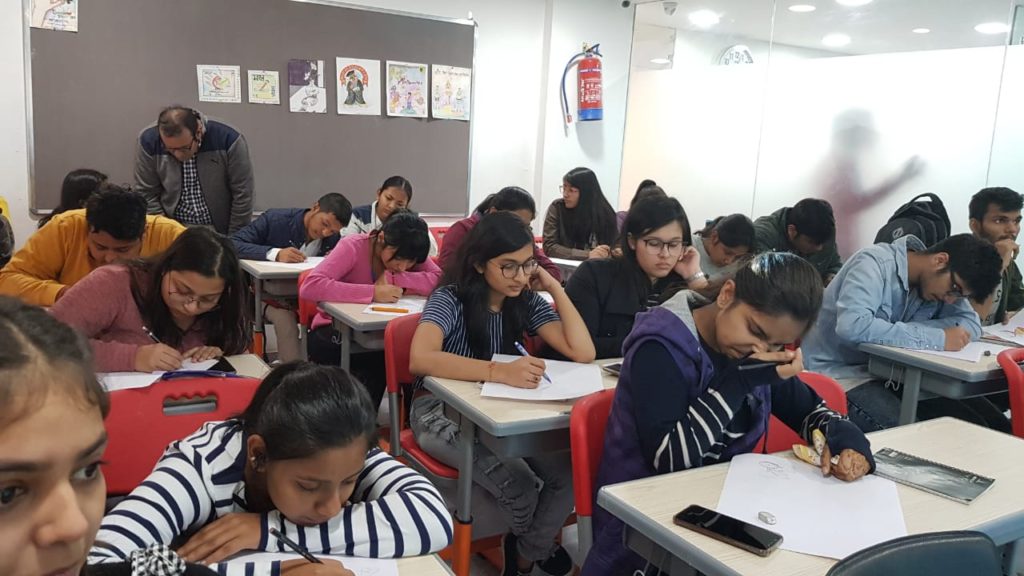
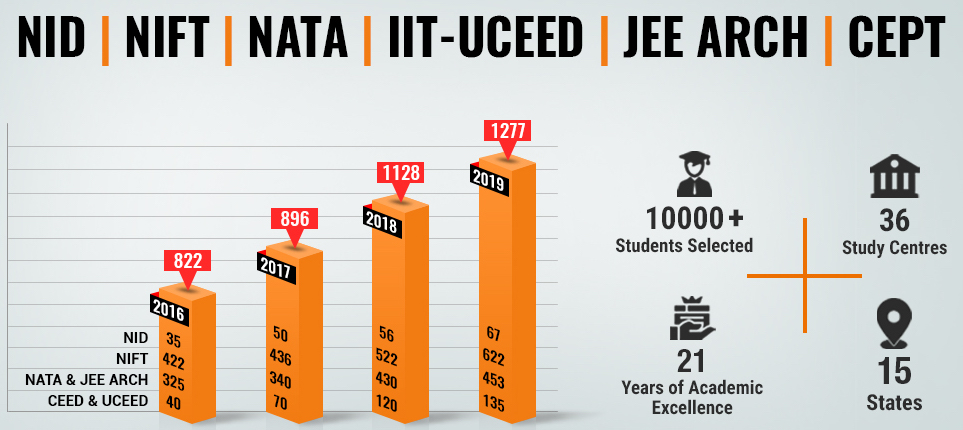
There are many Design Coaching in Jaipur but if we need to find out the best coaching classes, with best learning experience then Pahal Design comes with 22 Years of academic excellence and more than 40 centres across India including all the metros. (New Delhi, Mumbai, Bengaluru, Kolkata, Pune, Ahmedabad, Gurgaon, Jaipur, Lucknow, Dehradun, Chandigarh, Bhopal, Indore, Patna, Ranchi, Kanpur and many more other cities). Now Pahal Design is in Jaipur at Vaishali Nagar for Design, Architecture and Fine Arts Coaching. If any students are looking for Design, Fashion, Architecture and Fine Arts Coaching or any guidance related to Design Colleges then we have Free Guidance for all Design Students.
The design industry in India is growing at a staggering rate of 23 to 25 per cent annually – it’s an indicative of the qualitative change you find in the look and feel of consumer goods. Industry insiders believe that greater spending power and changing needs of consumers are responsible for the boom in the design industry. “People today are spending more money. From the interiors of their flats to the products they buy, all consumers are looking for that extra value-add. There is this new emphasis on vanity. The culture is shifting and design is a reflection of that shift.” With brand positioning and identity the new buzzwords, industries that form the designer’s client base are a lot more aware about design and its importance.

There are some sectors within the industry that have seen a higher growth of interest than others – animation, graphics, apparel, textiles, automotive, product and software interface design to name a few. This interest has also translated into a greater demand for industrial and communication designers.

Currently, India needs 8,000-10,000 designers a year, while overall availability of qualified designers is only 3,000. To make matters worse, only 500 of these 3,000 are said to be practicing designers. There is a reason why your new car is better looking than your last and why your refrigerator seems more functional than the one you had before. 

Design can transform the way we do things, and result in new economic benefits and a better quality of life. The strategic nature of design helps solve problems in ways that are functionally and aesthetically pleasing and make economic sense. Design helps to improve quality and differentiation, offer world class products and services, improve business efficiencies, productivity and margins, increase revenues and achieve higher market share and accelerated growth.

The design industry lags behind other professional services domains in numerical terms when looked at in terms of turnover and number of employees. Architecture, Interior, Animation / New Media, Fashion Design are leading domains within the design industry. Other segments are far behind at present. However with the change in the economic scenario, design domains such as graphic design, industrial design, human computer interaction are growing at a fast clip. The number of design companies is growing as also there is growth in existing companies. There is a good trend of designers opting to start their own setup. Hence most companies existing today are new. The existing companies are consolidating further by adding more services to their portfolio within diverse design disciplines.

India is a large market and at the same unique as well. There is no such thing called as a thumb rule which can describe Indian market or consumers. They vary in cultures, traditions, religions, customers, food, dressing, etc. At the same time the Indian consumer is becoming more demanding and is asserting himself / herself to get his / her aspirations satisfied.

Multinational corporations are focusing on India as a new market for trading their products / services. They understand that successes elsewhere may not necessarily translate in a similar way in India. They will need to understand the market, the sensibilities of the people and respond to them through their offerings. Global corporations will need to work with Indian designers to understand the local market.
To better understand the Indian consumer, to meet the needs and aspirations of this assertive, active, enlightened consumer, Indian businesses and multinational corporations will need to take assistance from Indian designers. This puts a spot light on the design industry as never before.

 
Jaipur

Address:- 2nd Floor, F 18, Gautam Marg, Vaishali Nagar, Jaipur, Rajasthan -302021
Contact Person: Mr. Aman and Mr. Akbar
Contact No: 97721-99911, 0141-6656509
Email: jaipur@pahaldesign.com

Set up in 1986, NIFT is the pioneering institute of fashion education in the country and has been in the vanguard of providing professional human resource to the textile and apparel industry. It was made a statutory institute in 2006 by an Act of the Indian Parliament with the President of India as ‘Visitor’ and has full fledged campuses all across the country. Over the years NIFT has also been working as a knowledge service provider to the Union and State governments in the area of design development and positioning of handlooms and handicrafts.

NIFT is committed to academic excellence in fashion education. The vision of the institute embraces challenges and provides the impetus in setting highest academic standards. NIFT continues to strive to be nothing but the best.

NIFT Exam Pattern 2020: Creative Ability Test (CAT)

NIFT CAT exam pattern is such that candidates are evaluated on the basis of their intuition skill, power of observation, innovation in the development of a concept as well as design ability of the candidate. One of the most important aspects of NIFT CAT exam is that it tests the creative as well as innovative use of colour and illustration skills of aspirants.

NIFT CAT is a paper-pencil based exam and it is of three hours duration.

NIFT Exam Pattern 2020: General Ability Test (GAT)

Candidates seeking NIFT admissions in BDes programmes offered at NIFT need to appear for GAT exam. This test comprises of the below-mentioned sections:

  • Quantitative Ability
  • Communication Ability
  • English Comprehension
  • Analytical Ability
  • General Knowledge and Current Affairs

NIFT CAT Exam Pattern for BDes Admissions

In NIFT exam pattern 2020 for BDes admissions, candidates need to appear for CAT. NIFT CAT exam paper has three questions which candidates need to attempt in three hours duration. In this design entrance exam, candidates are evaluated on the below mentioned parameters:

  • Design ability
  • Intuitive ability
  • Observation skills
  • Concept development skills
  • Creative use of colour
  • Illustration skills

NIFT Exam Pattern for Situation Test

Candidates who have been shortlisted for NIFT BDes admissions on the basis of their written test need to appear for NIFT Situation Test 2020 wherein their “material handling and innovative ability” will be tested.

Here, candidates will be evaluated on “on Space Visualization, Innovative and creative use of given material, composition of elements, colour scheme, construction skill , finesse of the model and overall presentation etc. These parameters will be checked with the write up explaining the concept / idea behind the model constructed. The weightage of the write up is 30%. Since the medium of teaching in NIFT is English, the write-up will be in English language.

NIFT Exam Pattern for Artisans Category

Candidates are informed that NIFT offers admission to Artisans/ Children of Artisans based on their performance in Studio Test, Interview round and verification of documents/ eligibility criteria.

NIFT Exam Pattern for Lateral Entry Admission 2020

NIFT lateral entry admission (NLEA) is the process through which candidates can secure admission directly in the third semester of UG courses offered at National Institute of Fashion Technology.

Q. What is NIFT exam pattern?

A. NIFT entrance exam is a three tiered process. Candidates can go through the list of tests they would need to appear for in order to secure admission in different courses offered at NIFT.

Q. What is the marking scheme for NIFT entrance exam?

A. NIFT exam marking scheme varies for CAT and GAT. In NIFT CAT exam, candidates are evaluated out of 100 marks. In GAT exam, aspirants are awarded for one mark for every correct answer and 0.25 marks are deducted for each wrong answer selected by them.

Q. How can I prepare for NIFT CAT?

A. Candidates need to go through the detailed exam pattern as well as syllabus for NIFT CAT and thereafter formulate a preparation strategy. In NIFT CAT exam, aspirants are evaluated on the basis of their power of observation, innovation and design ability.

Q. How can I prepare for NIFT GAT?

A. NIFT GAT comprises of multiple choice questions that aspirants need to solve in order to crack the exam. Questions in NIFT GAT are from subjects such as Quantitative Ability, Communication Ability, English Comprehension, Analytical Ability, General Knowledge and Current Affairs.

Q. Is there any negative marking in NIFT entrance exam?

A. There is no negative marking in NIFT CAT exam. However, for GAT exam, 0.25 marks will be deducted for each wrong answer selected by a candidate.

Q. How many questions are asked in NIFT CAT?

A. In NIFT CAT, candidates have to attempt three drawing questions.

Q. How many questions are asked in NIFT GAT?

A. The exam pattern for NIFT GAT varies from one course to the other. The total number of questions asked in NIFT GAT are mentioned below:

  • BDes: 100 questions
  • BFTech: 150 questions
  • MDes: 120 questions
  • MFTech: 150 questions
  • MFM: 150 questions

Q. What is the duration of NIFT CAT exam?

A. NIFT CAT for BDes and MDes course admissions is of three hours duration.

Q. What is the duration of NIFT GAT exam?

A. The duration of NIFT GAT for design course admissions is as mentioned below:

  • BDes: 2 hours
  • BFTech: 3 hours
  • MDes: 2 hours
  • MFTech: 3 hours
  • MFM: 3 hours

Q. What is NIFT exam pattern for BDes admissions?

A. Candidates can secure admission in BDes course offered at NIFT campuses by clearing NIFT Creative Ability Test (CAT) and General Ability Test (GAT). Aspirants who clear these written entrance exams then need to appear for Situation Test round.

Q. What is NIFT exam pattern for MDes admissions?

A. Candidates can secure admission in MDes course offered at NIFT campuses by clearing NIFT Creative Ability Test (CAT) and General Ability Test (GAT). Aspirants who clear these written entrance exams then need to appear for GD/PI admission round.


Set up in 1986, NIFT is the pioneering institute of fashion education in the country and has been in the vanguard of providing professional human resource to the textile and apparel industry. It was made a statutory institute in 2006 by an Act of the Indian Parliament with the President of India as ‘Visitor’ and has full fledged campuses all across the country. Over the years NIFT has also been working as a knowledge service provider to the Union and State governments in the area of design development and positioning of handlooms and handicrafts.

NIFT is committed to academic excellence in fashion education. The vision of the institute embraces challenges and provides the impetus in setting highest academic standards. NIFT continues to strive to be nothing but the best.

NIFT Exam Pattern 2020: Creative Ability Test (CAT)

NIFT CAT exam pattern is such that candidates are evaluated on the basis of their intuition skill, power of observation, innovation in the development of a concept as well as design ability of the candidate. One of the most important aspects of NIFT CAT exam is that it tests the creative as well as innovative use of colour and illustration skills of aspirants.

NIFT CAT is a paper-pencil based exam and it is of three hours duration.

NIFT Exam Pattern 2020: General Ability Test (GAT)

Candidates seeking NIFT admissions in BDes programmes offered at NIFT need to appear for GAT exam. This test comprises of the below-mentioned sections:

  • Quantitative Ability
  • Communication Ability
  • English Comprehension
  • Analytical Ability
  • General Knowledge and Current Affairs

NIFT CAT Exam Pattern for BDes Admissions

In NIFT exam pattern 2020 for BDes admissions, candidates need to appear for CAT. NIFT CAT exam paper has three questions which candidates need to attempt in three hours duration. In this design entrance exam, candidates are evaluated on the below mentioned parameters:

  • Design ability
  • Intuitive ability
  • Observation skills
  • Concept development skills
  • Creative use of colour
  • Illustration skills

NIFT Exam Pattern for Situation Test

Candidates who have been shortlisted for NIFT BDes admissions on the basis of their written test need to appear for NIFT Situation Test 2020 wherein their “material handling and innovative ability” will be tested.

Here, candidates will be evaluated on “on Space Visualization, Innovative and creative use of given material, composition of elements, colour scheme, construction skill , finesse of the model and overall presentation etc. These parameters will be checked with the write up explaining the concept / idea behind the model constructed. The weightage of the write up is 30%. Since the medium of teaching in NIFT is English, the write-up will be in English language.

NIFT Exam Pattern for Artisans Category

Candidates are informed that NIFT offers admission to Artisans/ Children of Artisans based on their performance in Studio Test, Interview round and verification of documents/ eligibility criteria.

NIFT Exam Pattern for Lateral Entry Admission 2020

NIFT lateral entry admission (NLEA) is the process through which candidates can secure admission directly in the third semester of UG courses offered at National Institute of Fashion Technology.

Q. What is NIFT exam pattern?

A. NIFT entrance exam is a three tiered process. Candidates can go through the list of tests they would need to appear for in order to secure admission in different courses offered at NIFT.

Q. What is the marking scheme for NIFT entrance exam?

A. NIFT exam marking scheme varies for CAT and GAT. In NIFT CAT exam, candidates are evaluated out of 100 marks. In GAT exam, aspirants are awarded for one mark for every correct answer and 0.25 marks are deducted for each wrong answer selected by them.

Q. How can I prepare for NIFT CAT?

A. Candidates need to go through the detailed exam pattern as well as syllabus for NIFT CAT and thereafter formulate a preparation strategy. In NIFT CAT exam, aspirants are evaluated on the basis of their power of observation, innovation and design ability.

Q. How can I prepare for NIFT GAT?

A. NIFT GAT comprises of multiple choice questions that aspirants need to solve in order to crack the exam. Questions in NIFT GAT are from subjects such as Quantitative Ability, Communication Ability, English Comprehension, Analytical Ability, General Knowledge and Current Affairs.

Q. Is there any negative marking in NIFT entrance exam?

A. There is no negative marking in NIFT CAT exam. However, for GAT exam, 0.25 marks will be deducted for each wrong answer selected by a candidate.

Q. How many questions are asked in NIFT CAT?

A. In NIFT CAT, candidates have to attempt three drawing questions.

Q. How many questions are asked in NIFT GAT?

A. The exam pattern for NIFT GAT varies from one course to the other. The total number of questions asked in NIFT GAT are mentioned below:

  • BDes: 100 questions
  • BFTech: 150 questions
  • MDes: 120 questions
  • MFTech: 150 questions
  • MFM: 150 questions

Q. What is the duration of NIFT CAT exam?

A. NIFT CAT for BDes and MDes course admissions is of three hours duration.

Q. What is the duration of NIFT GAT exam?

A. The duration of NIFT GAT for design course admissions is as mentioned below:

  • BDes: 2 hours
  • BFTech: 3 hours
  • MDes: 2 hours
  • MFTech: 3 hours
  • MFM: 3 hours

Q. What is NIFT exam pattern for BDes admissions?

A. Candidates can secure admission in BDes course offered at NIFT campuses by clearing NIFT Creative Ability Test (CAT) and General Ability Test (GAT). Aspirants who clear these written entrance exams then need to appear for Situation Test round.

Q. What is NIFT exam pattern for MDes admissions?

A. Candidates can secure admission in MDes course offered at NIFT campuses by clearing NIFT Creative Ability Test (CAT) and General Ability Test (GAT). Aspirants who clear these written entrance exams then need to appear for GD/PI admission round.


1. Hi How’s your day going on?

Vartika- I am having a pretty normal day the one which you have in lockdown.


2. Congrats for securing AIR 2 in NIFT 2020. So how are you feeling after scoring such a good rank?

Vartika- Thank you so much I am very thrilled but and at the same time shocked as I didn’t expect such a good rank. But I am very happy about it.


3. So Vartika talking about this NIFT 2020 Exam how was the paper was it easy, difficult lengthy?

Vartika- It was CAT paper the creative ability test paper was lengthy but that depends upon how much you want to do because if you want to color and use all the techniques it will be a time consuming process but general ability test paper was completed within the allotted time and the time allotted was enough .If we talk about the difficulty level, I found some parts difficult but all in all the paper was not easy but was not that difficult too.


4. Some student came up saying that CAT was really lengthy.

Vartika- Yes, they did not specify generally in the questions they specify that don’t color it or color it but this time it was not specified in the questions so our first approach was to colour them all, so it got the paper lengthy.


5. Coming up to the creativity section, so were you good at creativity from the start or you nurtured it?

Vartika- I was able to copy things like when I saw some artists work I was able to copy it to some extent like 50-60% but I didn’t have my own ideas and I was not aware of the technique and color that should be used together. That’s where Pahal comes in what I had in mind I was not able to draw from memory or whatever I wanted to draw I always needed a reference that’s what they taught me that how to do that.


6. Now if we talk about the GAT section, what subjects or section were time consuming?

Vartika- Most time consuming one would definitely be English, the comprehension were really tough I would say because you know as a ICSE student we are expected to be very good English but it was very tough because I have to read it all again and again to mark the words and studied a lot because sir told me that English is very high level but I did not expected to be like this as it was time consuming too but that increased my marks I was able to attempt all the comprehensions and most of them were right but it took a lot of time doing comprehensions. The maths sections, it takes time because you have to do the calculation but it was not very hard if you have studied nicely in 10th and you remember the tricks you would be able to do it easily.


7. What about the GK section? How did you prepare for GK?

Vartika- Sir took a GK class every week and gave us a lot of notes and pdfs were there with us I thoroughly went through then I tried to remember everything that sir gave us but I am not good in general knowledge things and don’t read the newspaper but sir told me do so I did. The fashion related GK had some part but static GK came more this time about history of India & usual things which were going on. Some questions were easy but some questions I have not heard about it ever. We should pay more attention so the things for sure like in Maths, English, reasoning we can still predict what can come but in GK one is not sure what can come.


8. Through that coming to the negative marking which was implemented this year how did you cope up with it?

Vartika- I first did all the questions which I was sure that I will get them correct and after that I attempt the questions which I was doubtful about. Sir told me to attempt questions in a way that even if I suffer with negative marking it is balanced from the marks you get from the questions which were correct or through guess work guess in a way that it does not cost you anything and it favors you so I did the questions in a way that even I got the negative marking it did not affect me to that extent because I was not going to attempt those questions any way. So I actually got favour from it.


9. So, students should attempt only those questions which they know are 100% correct?
Vartika- First of all, we should attempt questions about which they are 100% sure about so because we don’t want to miss anything at least one is able to complete what they know. I was able to attempt everything but what you are good at If you implement it, It will help you so the teachers were amazing as they always helped us and If I was not able to attend the classes on weekend then he used to change slots, so the teachers were one who helped me manage it all.


10. Talking about the school studies the school studied are on subjective side and the entrance exam is conceptual based so how did Pahal helped you in seeking the level of success?

Vartika- I believe that in whatever stream you are it will benefit you in some way or the other like Arts students had leverage over me in the creative section but then I had leverage over them in the aptitude part because I know how things work because of my science background. So, Pahal motivated me to take advantage of being a science student by showing them that how things will work .so that actually helped me.


11. Great to hear that! What tips and suggestions you would like to give to the NIFT aspirants so that they can score well?

Vartika- Firstly, I feel that students take NIFT lightly thinking that if we study for one or two months, we can do it but it’s not like that! One has to study from the very beginning because if you thing you can cover all the creative part in a month you are wrong. It can take a lifetime as there is so much to the theories and practical. So you should practice from very beginning and you should create a schedule like sometimes, 12th Pursuing find it hard to take out time. I used to reduce the sleep time and study in the night woke up early. Don’t forget to rest I make a personal time table that I have to complete the topics. To be honest, we had 8 months to prepare, in which one can cover the syllabus provided. Some students complain that they are not good at drawing and I was that student but what matters the most is how creative you are and how you are able to present it. Even if you are good in drawing and not able convey exactly what you wanted to write there it is on your mind as examiner will also see whatever you are able to convey the thought and creativity. My only advice is that be focused don’t think that it is a fashion institute you will be able to get there easily. Ask from the rank holders that how much they have to work hard for! If you work hard you will get it!


12. Coming to the end of the session Vartika, you shared really good tips with the aspirants so I want to ask again the magical tips you want to give to the aspirants so that they can crack NIFT with a rank?
Vartika- First, it would be to join Pahal because they are actually are the ones who are behind it all. I was not filling up the form for NIFT but sir asked to fill it so I filled it and here I am. I will suggest that do comprehensions a lot try to increase the vocabulary as the English which comes in the paper is not like the usual English which we speak we can all speak English and good at it but you need to be extra good in English because in fashion line English will be used to communicate the most & I am going for fashion communication and my line is only communication so they take into consideration your English very much. I can say half of the GAT paper consisted of English and holds the maximum marks. Even if you are not very good at it they don’t ask you words out of the universe but if you read books as I love reading books. Pick up simple books that have easy language as sometimes in CAT also they ask you to write a paragraph this time also they asked you to fill the details and write what you want to convey so I wrote every sort of English I have in me. So, I feel one must work every day. Secondly, improve your English and thirdly, even if you are not good at art try to enhance your creative mind, I did that through teachers. There were workshops of creative abilities and they ask us to watch movies that will help us. I followed a lots of artist pages on Instagram and see how they work. Don’t follow the artist who just creative something by just seeing rather follow those who create abnormal things which you don’t usually see and invokes the feelings inside like I never thought like that. The art pages will help you looking at things in different way. Expand your creative mind as much as you can and that’s the easiest thing you can do among all the things like you can watch movies, you can read books or draw as every design aspirant loves to draw as that’s a necessity in an aspirant. Go through the past papers you will know what you will know what I am talking about because the English you have to be very good at it like if they say you should know what they mean, the antonyms, synonyms etc. One more thing, colour theory each colour conveys something and if you know the color theory I believe you will be able to attempt the question at least half of the questions brilliantly because if you know the colors you will create something which are appealing to the eyes and that what I feel examiner look for, As this year among the questions, color questions went good than the shading questions because color doesn’t smudge and shading smudges and it looks very untidy. I tried making it tidy and first impression should be extraordinary to get a good rank.


13. Thank you so much Vartika wish you all the best for your career.

Vartika- Thank you mam.

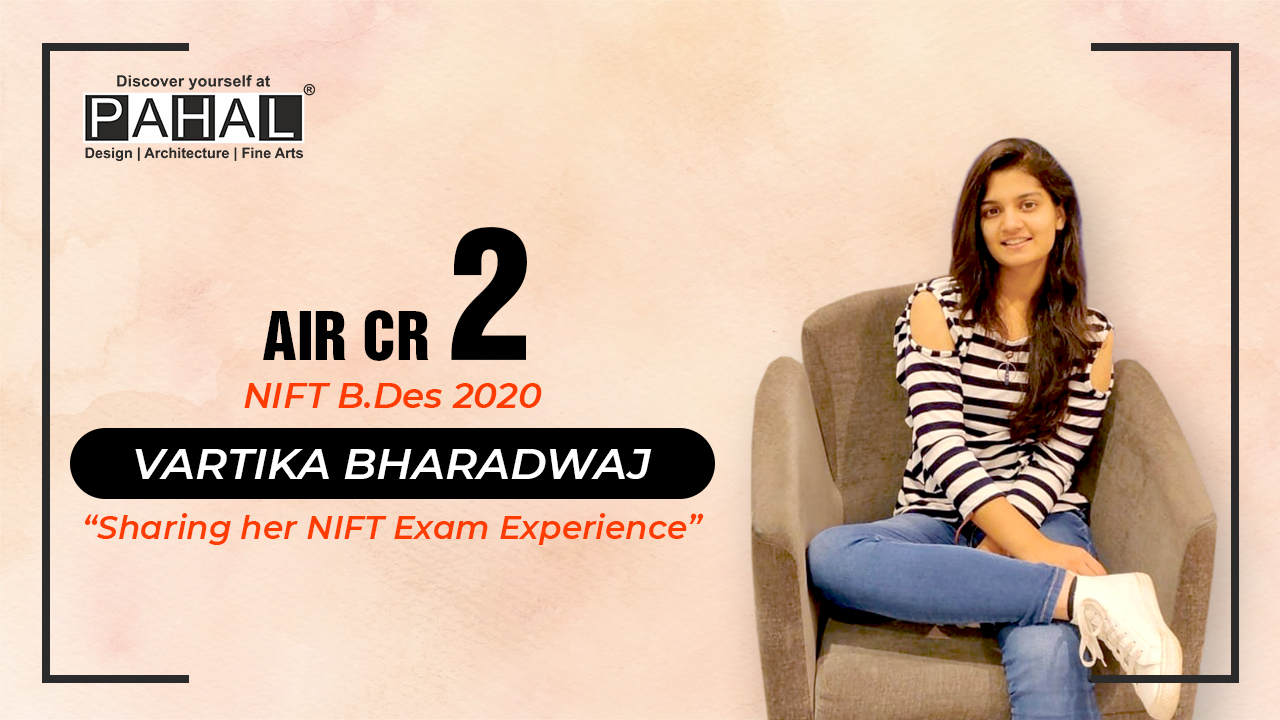
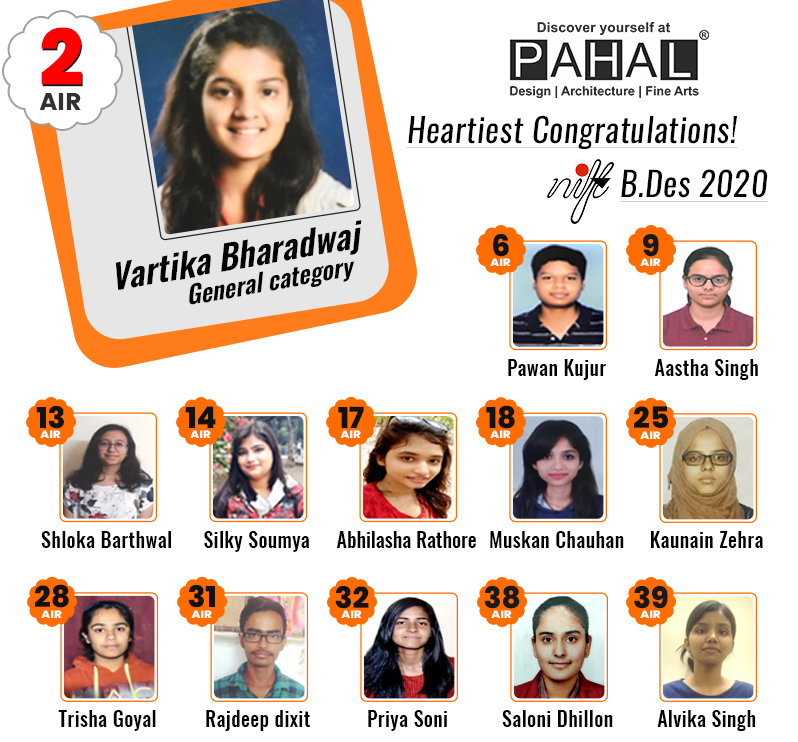
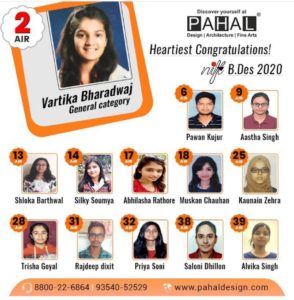
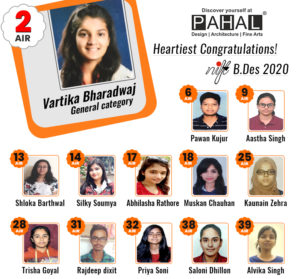
Vartika Bhardwaj, AIR 2, B.Des, NIFT 2020, General Category
Talk to NIFT B. Des Toppers 2020. NIFT Entrance Exam Preparation Tips, Study Plan ngg_shortcode_1_placeholder  

Pahal Design Books & Study Material is ideal for self-starters who like to study at their own pace. The comprehensive and regularly updated NIFT B.Des exam books and mocks would prove to be beneficial for all kinds of aspirants.

Total – 20 booklets

  • GAT- 13 booklets
  • CAT –  5 booklets
  • Previous years exam papers  – 1 booklet
  • NIFT B.Des Guide book – 1 
  1. Quantitative Ability : 7 booklets have various categories which deals with all important topics with concept ,explanation, practice exercises   and model Test Papers .It has important tips and tricks which facilitate student to increase the solving speed in superior way .
  2. Analytical Ability : 4 booklets include all topics of analytical reasoning which help students to identify key information, apply logic and find patterns.
  3. Communication Ability & English Comprehension : This section is very important for NIFT B.des exam. The booklet 1 and 2 will cover all the topics with intensive practice exercises.
  4. General Knowledge and Current Affairs : The GK and CA are made by experts on latest NIFT exam pattern .Monthly booklet will be shared with the students which will have all important events, facts and happenings in the  country and across the globe .It also has exclusive series of fashion and business news.
  5. NIFT B.Des Previous Year Question Papers with Answer keys : The booklet have the last 5 years original exam papers with solutions.
  6. NIFT B.Des Guide book : This book is exclusive for Fashion and Design aspirants to know about this industry and related career options.

Why Pahal Study Material ?

1. Test Series :

A. Monthly Test – The monthly test enables student to track their progress in most efficient way and pay attention to the section required.
B. Mock Test –Its mandatory for all students to attempt mock test after competition of syllabus .The student can book their slot at any of Pahal Design Branch or choose online mode in order to appear in Mock Test Series. Each mock test will give you complete performance analysis, All India Ranking, practice to updated exam pattern and section wise performance report.

2. Doubt clearance & Feedback sessions : Students can attend doubt clearance session with our expert by booking their slot at nearest Pahal design centre or choose online mode for same .

3. Digital Learning Program (DLP) : Access to digital learning platform which has complete learning solution for the students .The Platform will enable students to avail video lectures ,Quiz practice sessions ,any time access to practice sets and tests with more than 5000+ questions .The student will be allotted with unique User Id and Password for their DLP account which they login from Pahal Digital.com or PD app .

4. Expert Team: Each student will get expert guidance for design career and will be assisted to explore their course interest. The team will also analyse and review the student’s performance and help them to improve their performance.

5. Preparation for other Design colleges : Student can get connect to us for the design college counselling or inform us regarding the colleges they are applying for and Pahal Design Team will provide complete guidance according to the updated exam pattern.

The study material is also available for Foundation Batch (2 Years) Program which aims at building strong foundation among Design and Architecture aspirants which is suitable for 10th and 11th appearing students. Study material package focuses on boosting confidence of student for facing National level competition by providing subject wise & topic wise Question Bank based on latest pattern, in addition to previous year question papers and formula booklets.

The content of the study material is deeply researched and developed as per new exam pattern by NID, NIFT, SPA, IDC, IIT, NIT’s and many more. The advance level problems along with each topic are specially designed to give the students an in-depth understanding of the particular subject and prepare them to stay ahead in the competition.

Hauz Khas (Corporate Branch)
 
Address:- G-8, G Block Market, 2nd Floor, Hauz Khas, New Delhi-110016
Contact No: 88-00-22-6864, 011-40106405
Contact Person: Ms Yashika 
Email: corporate@pahaldesign.com

CONNECT US

Pahal Design Books & Study Material is ideal for self-starters who like to study at their own pace. The comprehensive and regularly updated NID, NIFT, NATA, UCEED, CEED, BFA exam books and mocks would prove to be beneficial for all kinds of aspirants.

The comprehensive study material is prepared by most experienced faculties of Pahal Design which focuses on developing advance level skills in student. It intends to provide extensive support in preparation of students for prestigious Design, Architecture and Fine Art exams like NID, NIFT, NATA, JEE B Arch, IIT-UCEED, IIT-CEED, BFA. 

Pahal Study Material Features:

1. Test Series :

A. Monthly Test – The monthly test enables student to track their progress in most efficient way and pay attention to the section required.
B. Mock Test –Its mandatory for all students to attempt mock test after competition of syllabus .The student can book their slot at any of Pahal Design Branch or choose online mode in order to appear in Mock Test Series. Each mock test will give you complete performance analysis, All India Ranking, practice to updated exam pattern and section wise performance report.

2. Doubt clearance & Feedback sessions : Students can attend doubt clearance session with our expert by booking their slot at nearest Pahal design centre or choose online mode for same .

3. Digital Learning Program (DLP) : Access to digital learning platform which has complete learning solution for the students .The Platform will enable students to avail video lectures ,Quiz practice sessions ,any time access to practice sets and tests with more than 5000+ questions .The student will be allotted with unique User Id and Password for their DLP account which they login from Pahal Digital.com or PD app .

4. Expert Team: Each student will get expert guidance for design career and will be assisted to explore their course interest. The team will also analyse and review the student’s performance and help them to improve their performance.

5. Preparation for other Design colleges : Student can get connect to us for the design college counselling or inform us regarding the colleges they are applying for and Pahal Design Team will provide complete guidance according to the updated exam pattern.

The study material is also available for Foundation Batch (2 Years) Program which aims at building strong foundation among Design and Architecture aspirants which is suitable for 10th and 11th appearing students. Study material package focuses on boosting confidence of student for facing National level competition by providing subject wise & topic wise Question Bank based on latest pattern, in addition to previous year question papers and formula booklets.

The content of the study material is deeply researched and developed as per new exam pattern by NID, NIFT, SPA, IDC, IIT, NIT’s and many more. The advance level problems along with each topic are specially designed to give the students an in-depth understanding of the particular subject and prepare them to stay ahead in the competition.

Hauz Khas (Corporate Branch)
 
Address:- G-8, G Block Market, 2nd Floor, Hauz Khas, New Delhi-110016
Contact No: 88-00-22-6864
Contact Person: Ms Karishma Gupta
Email: corporate@pahaldesign.com

CONNECT US


The best coaching institute for NIFT Entrance exam in South Delhi is undoubtedly Pahal Design. They have two centres in South Delhi one is in Hauz Khas and Other is in South Ex. These 2 centres are location at prime location of Delhi which is well connected to metro and Hostel facilities are also available for outstation students. Hauz Khas centre is just 500m for NIFT first and best campus at Hauz Khas. Many renowned markets of Delhi such as Sarojini Nagar Market, Green Park Market, Lajpat Nagar Market, South Extension, Kotla Mubarakpur, M-block Market, etc. and malls such as Ansal Plaza, DLF, MGF Metropolitan, Select Citywalk, Malviya Nagar, etc. are located in South Delhi. The IIT, AIIMS, NIFT, three of the country’s premier institutes in the field of technology, medicine and fashion respectively lie in the Hauz Khas locality of South Delhi. The Indian Institute of Foreign Trade of Delhi is located in the Qutub Institutional Area of South Delhi. Sangam Vihar is also located in South Delhi, which has the highest population in the State. The top Central University Jamia Millia Islamia is situated at Jamia Nagar area of South Delhi. The administrative district had 20% Green Cover, as of 2009. It has several spacious green parks, wildlife sanctuary, biodiversity parks, and green belts. Deer Park and Rose Garden in Hauz Khas, Asola Wildlife Sanctuary close to Delhi’s southern border on the Aravallis foothills are few examples. It has a good mix of concrete and greens. Jahaz Mahal, Zafar Mahal, Tughlaqabad, Hauz Khas Complex, Bijay Mandal, Qutub Minar, Mehrauli Archaeological Park, and the Safdarjung Tomb comprise some of South Delhi’s most scenic heritage sites.

Most of the affluent and upmarket residential areas of South Delhi were established in the early 1960’s. Today, Colonies such as

PAHAL DESIGN

Greater Kailash, Defense Colony, South Extension, Green Park, Neeti Bagh, Gulmohar Park, Hauz Khas, Safdarjung Development Area, Vasant Vihar,Sarvodaya Enclave, Anand Niketan, Jasola and Panchsheel Park are among the most expensive pin codes of New Delhi. All these colonies are categorized in either category ‘A’ or category ‘B’ which highlights the fact that residents of these colonies come under the very affluent and upper-middle-class sections of the society. Newly built builder floors and independent villas sell for as high as INR 10-80 crores in South Delhi. All these colonies are ‘planned colonies’ and therefore have proper connectivity to major roads and metro networks. They all also host their own markets such as Greater Kailash-1, M block Market, Green Park Market, Hauz Khas village area, South Extension Market and Defense Colony Market which are considered to be the poshest markets of Delhi. There are also numerous dedicated recreational areas around these colonies which is a luxury in today’s heavily urbanized and congested New Delhi.

SOUTH DELHI CENTRES:

Hauz Khas (Corporate Branch)

Address:- G-8, G Block Market, 2nd Floor, Hauz Khas, New Delhi-110016
Nearest Metro Station Hauz Khas Gate No-3, Mayfair Garden / RBI Colony
Landmark – Near Punjab National Bank
Contact No: 88-00-22-6864, 011-40106405
Contact Person: Ms Yashika
Email: corporate@pahaldesign.com

South Extension Part – 1

Address:- E-17, Ground Floor, South Extension Part 1, New Delhi – 110049
Landmark: Mcdonald’s Lane, Nearest Metro – South Ex Metro Gate No 2
Contact No : 98994-29749, 011-41350505
Contact Person : Ms. Neha Siddiqui
Email : info@pahaldesign.com


ngg_shortcode_0_placeholder

The National Institute of Fashion Technology is a leader in fashion education with the ability to integrate knowledge, traditional arts, contemporary thought, academic freedom, innovations in design & technology and creative thinking to continuously upgrade its curriculum to address the changing needs of the industry. Its history of more than three decades at the pinnacle of fashion education stands as a testimony to its focus on core values where academic excellence has been nurtured. The institute has stood as a beacon of industry-academia engagement and a key enabler in developing competent professionals.

The National Institute of Fashion Technology (NIFT), set up in 1986 under the Ministry of Textiles, Government of India, is a Statutory Institute governed by the NIFT Act 2006. Bringing in a wide range of aesthetic & intellectual orientations, the early instructors included leading progressive scholars from Fashion Institute of Technology, New York, USA.

Academic inclusiveness has been the key thought in the expansion plans of the institute. NIFT, today, has spread its wings across the length and breadth of the country. Through its 16 professionally managed campuses, National Institute of Fashion Technology provides an excellent environment to its students from different parts of the country to achieve their highest potential through the programmes offered. Since the early years of its inception, the institute has provided a firm foundation in fashion education in the domains of Design, Management and Technology. Since then, NIFT has continued to set and achieve higher academic standards.

NIFT Courses:

  1. B.Des (Bachelor of Design)
  2. M.Des (Master of Design)
  3. B.Ftech (Bachelor of Fashion Technology)
  4. M.Ftech (Master of Fashion Technology)
  5. MFM (Master of Fashion Management)

NIFT Exam Pattern 2020: Creative Ability Test (CAT)

NIFT CAT exam pattern is such that candidates are evaluated on the basis of their intuition skill, power of observation, innovation in the development of a concept as well as design ability of the candidate. One of the most important aspects of NIFT CAT exam is that it tests the creative as well as innovative use of colour and illustration skills of aspirants.

NIFT CAT is a paper-pencil based exam and it is of three hours duration.

NIFT Exam Pattern 2020: General Ability Test (GAT)

Candidates seeking NIFT admissions in BDes programmes offered at NIFT need to appear for GAT exam. This test comprises of the below-mentioned sections:

    • Quantitative Ability
    • Communication Ability
  • English Comprehension
  • Analytical Ability
  • General Knowledge and Current Affairs

The duration of NIFT GAT is 120 minutes for BDes course. While formulating the merit list for BDes course admissions 30% weighatge is allotted to GAT section of NIFT entrance exam.

NIFT CAT Exam Pattern for BDes Admissions

In NIFT exam pattern 2020 for BDes admissions, candidates need to appear for CAT. NIFT CAT exam paper has three questions which candidates need to attempt in three hours duration. In this design entrance exam, candidates are evaluated on the below mentioned parameters:

  • Design ability
  • Intuitive ability
  • Observation skills
  • Concept development skills
  • Creative use of colour
  • Illustration skills

NIFT Exam Pattern for Situation Test

Candidates who have been shortlisted for NIFT BDes admissions on the basis of their written test need to appear for NIFT Situation Test 2020 wherein their “material handling and innovative ability” will be tested.

Here, candidates will be evaluated on “on Space Visualization, Innovative and creative use of given material, composition of elements, colour scheme, construction skill , finesse of the model and overall presentation etc. These parameters will be checked with the write up explaining the concept / idea behind the model constructed. The weightage of the write up is 30%. Since the medium of teaching in NIFT is English, the write-up will be in English language.

  1. What is the marking scheme for NIFT entrance exam? NIFT exam marking scheme varies for CAT and GAT. In NIFT CAT exam, candidates are evaluated out of 100 marks. In GAT exam, aspirants are awarded for one mark for every correct answer and 0.25 marks are deducted for each wrong answer selected by them.


  2. How can I prepare for NIFT CAT? Candidates need to go through the detailed exam pattern as well as syllabus for NIFT CAT and thereafter formulate a preparation strategy. In NIFT CAT exam, aspirants are evaluated on the basis of their power of observation, innovation and design ability. Candidates can go through NIFT Entrance Exam Preparation to have a plan in place when preparing for this design entrance exam.
  3. How can I prepare for NIFT GAT? NIFT GAT comprises of multiple choice questions that aspirants need to solve in order to crack the exam. Questions in NIFT GAT are from subjects such as Quantitative Ability, Communication Ability, English Comprehension, Analytical Ability, General Knowledge and Current Affairs.
  4. Is there any negative marking in NIFT entrance exam? There is no negative marking in NIFT CAT exam. However, for GAT exam, 0.25 marks will be deducted for each wrong answer selected by a candidate. 
  5. What is the syllabus for NIFT exam? National Institute of Fashion Technology does not release any syllabus for NIFT exam. However, candidates can develop an idea of NIFT Entrance Exam Pattern.
  6. How many questions are asked in NIFT CAT? In NIFT CAT, candidates have to attempt three drawing questions.
  7. How many questions are asked in NIFT GAT? The exam pattern for NIFT GAT varies from one course to the other. The total number of questions asked in NIFT GAT are mentioned below:
  • BDes: 100 questions
  • BFTech: 150 questions
  • MDes: 120 questions
  • MFTech: 150 questions
  • MFM: 150 questions

Pahal Design Chandigarh

Address:- SCO No. 54/55, 2nd Floor, Sector 34 A, Chandigarh – 160022
Contact No : 91004-04681
Contact Person : Mr Raja Pratap
Email : chandigarh@pahaldesign.com

ngg_shortcode_2_placeholder 


The National Institute of Fashion Technology is a leader in fashion education with the ability to integrate knowledge, traditional arts, contemporary thought, academic freedom, innovations in design & technology and creative thinking to continuously upgrade its curriculum to address the changing needs of the industry. Its history of more than three decades at the pinnacle of fashion education stands as a testimony to its focus on core values where academic excellence has been nurtured. The institute has stood as a beacon of industry-academia engagement and a key enabler in developing competent professionals.

The National Institute of Fashion Technology (NIFT), set up in 1986 under the Ministry of Textiles, Government of India, is a Statutory Institute governed by the NIFT Act 2006. Bringing in a wide range of aesthetic & intellectual orientations, the early instructors included leading progressive scholars from Fashion Institute of Technology, New York, USA.

Academic inclusiveness has been the key thought in the expansion plans of the institute. NIFT, today, has spread its wings across the length and breadth of the country. Through its 16 professionally managed campuses, National Institute of Fashion Technology provides an excellent environment to its students from different parts of the country to achieve their highest potential through the programmes offered. Since the early years of its inception, the institute has provided a firm foundation in fashion education in the domains of Design, Management and Technology. Since then, NIFT has continued to set and achieve higher academic standards.

NIFT Courses:

  1. B.Des (Bachelor of Design)
  2. M.Des (Master of Design)
  3. B.Ftech (Bachelor of Fashion Technology)
  4. M.Ftech (Master of Fashion Technology)
  5. MFM (Master of Fashion Management)

NIFT Exam Pattern 2020: Creative Ability Test (CAT)

NIFT CAT exam pattern is such that candidates are evaluated on the basis of their intuition skill, power of observation, innovation in the development of a concept as well as design ability of the candidate. One of the most important aspects of NIFT CAT exam is that it tests the creative as well as innovative use of colour and illustration skills of aspirants.

NIFT CAT is a paper-pencil based exam and it is of three hours duration.

NIFT Exam Pattern 2020: General Ability Test (GAT)

Candidates seeking NIFT admissions in BDes programmes offered at NIFT need to appear for GAT exam. This test comprises of the below-mentioned sections:

    • Quantitative Ability
    • Communication Ability
  • English Comprehension
  • Analytical Ability
  • General Knowledge and Current Affairs

The duration of NIFT GAT is 120 minutes for BDes course. While formulating the merit list for BDes course admissions 30% weighatge is allotted to GAT section of NIFT entrance exam.

NIFT CAT Exam Pattern for BDes Admissions

In NIFT exam pattern 2020 for BDes admissions, candidates need to appear for CAT. NIFT CAT exam paper has three questions which candidates need to attempt in three hours duration. In this design entrance exam, candidates are evaluated on the below mentioned parameters:

  • Design ability
  • Intuitive ability
  • Observation skills
  • Concept development skills
  • Creative use of colour
  • Illustration skills

NIFT Exam Pattern for Situation Test

Candidates who have been shortlisted for NIFT BDes admissions on the basis of their written test need to appear for NIFT Situation Test 2020 wherein their “material handling and innovative ability” will be tested.

Here, candidates will be evaluated on “on Space Visualization, Innovative and creative use of given material, composition of elements, colour scheme, construction skill , finesse of the model and overall presentation etc. These parameters will be checked with the write up explaining the concept / idea behind the model constructed. The weightage of the write up is 30%. Since the medium of teaching in NIFT is English, the write-up will be in English language.

  1. What is the marking scheme for NIFT entrance exam? NIFT exam marking scheme varies for CAT and GAT. In NIFT CAT exam, candidates are evaluated out of 100 marks. In GAT exam, aspirants are awarded for one mark for every correct answer and 0.25 marks are deducted for each wrong answer selected by them.

  2. How can I prepare for NIFT CAT? Candidates need to go through the detailed exam pattern as well as syllabus for NIFT CAT and thereafter formulate a preparation strategy. In NIFT CAT exam, aspirants are evaluated on the basis of their power of observation, innovation and design ability. Candidates can go through NIFT Entrance Exam Preparation to have a plan in place when preparing for this design entrance exam.
  3. How can I prepare for NIFT GAT? NIFT GAT comprises of multiple choice questions that aspirants need to solve in order to crack the exam. Questions in NIFT GAT are from subjects such as Quantitative Ability, Communication Ability, English Comprehension, Analytical Ability, General Knowledge and Current Affairs.
  4. Is there any negative marking in NIFT entrance exam? There is no negative marking in NIFT CAT exam. However, for GAT exam, 0.25 marks will be deducted for each wrong answer selected by a candidate. 
  5. What is the syllabus for NIFT exam? National Institute of Fashion Technology does not release any syllabus for NIFT exam. However, candidates can develop an idea of NIFT Entrance Exam Pattern.
  6. How many questions are asked in NIFT CAT? In NIFT CAT, candidates have to attempt three drawing questions.
  7. How many questions are asked in NIFT GAT? The exam pattern for NIFT GAT varies from one course to the other. The total number of questions asked in NIFT GAT are mentioned below:
  • BDes: 100 questions
  • BFTech: 150 questions
  • MDes: 120 questions
  • MFTech: 150 questions
  • MFM: 150 questions

Pahal Design Kolkata

Address:- 307, 3rd Floor, Vardaan Market, Camac Street, Kolkata – 700016
Contact No : 033-46014578, 9830006214
Contact Person : Ms Twinkle Roy
Email : kolkata@pahaldesign.com

ngg_shortcode_3_placeholder 


Schedule a free counselling session WhatsApp WhatsApp Enquiry