Graphic designers create visual concepts, using computer software or by hand, to communicate ideas that inspire, inform, and captivate consumers. They develop the overall layout and production design for applications such as advertisements, brochures, magazines, and reports.

Duties

Graphic designers typically do the following:

  • Meet with clients or the art director to determine the scope of a project
  • Use digital illustration, photo editing software, and layout software to create designs
  • Create visual elements such as logos, original images, and illustrations to help deliver a message
  • Design layouts, including selection of colors, images, and typefaces
  • Present design concepts to clients or art directors
  • Incorporate changes recommended by clients or art directors into final designs
  • Review designs for errors before printing or publishing them

Graphic designers, also referred to as graphic artists or communication designers, combine art and technology to communicate ideas through images and the layout of websites and printed pages. They may use a variety of design elements to achieve artistic or decorative effects.

Graphic designers work with both text and images. They often select the type, font, size, color, and line length of headlines, headings, and text. Graphic designers also decide how images and text will go together in print or on a webpage, including how much space each will have. When using text in layouts, graphic designers collaborate with writers, who choose the words and decide whether the words will be put into paragraphs, lists, or tables. Through the use of images, text, and color, graphic designers may transform data into visual graphics and diagrams to make complex ideas more accessible.

Graphic design is important to market and sell products, and it is a critical component of brochures and logos. Therefore, graphic designers often work closely with people in advertising and promotions, public relations, and marketing.

Frequently, designers specialize in a particular category or type of client. For example, some designers create the graphics used on product packaging, and others may work on the visual designs used on book jackets.

Graphic designers need to keep up to date with software and computer technologies in order to remain competitive.

Some individuals with a background in graphic design become postsecondary teachers and teach in design schools, colleges, and universities.

Some graphic designers specialize in experiential graphic design. These designers work with architects, industrial designers, landscape architects, and interior designers to create interactive design environments, such as museum exhibitions, public arts exhibits, and retail spaces.

Education for Graphic Designers
A bachelor’s degree in graphic design or a related field is usually required. However, individuals with a bachelor’s degree in another field may pursue technical training in graphic design to meet most hiring qualifications.

The National Association of Schools of Art and Design accredits about 350 postsecondary colleges, universities, and independent institutes with programs in art and design. Most programs include courses in studio art, principles of design, computerized design, commercial graphics production, printing techniques, and website design. In addition, students should consider courses in writing, marketing, and business, all of which are useful in helping designers work effectively on project teams.

High school students interested in graphic design should take basic art and design courses in high school, if the courses are available. Many bachelor’s degree programs require students to complete a year of basic art and design courses before being admitted to a formal degree program. Some schools require applicants to submit sketches and other examples of their artistic ability.

Many programs provide students with the opportunity to build a professional portfolio of their designs. For many artists, including graphic designers, developing a portfolio—a collection of completed works that demonstrates their styles and abilities—is essential because employers rely heavily on a designer’s portfolio in deciding whether to hire the individual.

Graphic designers must keep up with new and updated computer graphics and design software, either on their own or through formal software training programs. Professional associations that specialize in graphic design, such as AIGA, offer courses intended to keep the skills of their members up to date.

Other Experience for Graphic Designers
Graphic designers often gain their initial experience through internships. Internships provide aspiring graphic designers an opportunity to work with designers and to experience the design process from concept to completion, in some cases while completing a design program.

Licenses, Certifications, and Registrations for Graphic Designers
Certification programs are generally available through software product vendors. Certification in graphic design software can demonstrate a level of competence and may provide a jobseeker with a competitive advantage.

Advancement for Graphic Designers
Experienced graphic designers may advance to chief designer, art director, or other supervisory positions.

Important Qualities for Graphic Designers
Analytical skills. Graphic designers must be able to look at their work from the point of view of their consumers and examine how the designs they develop will be perceived by consumers to ensure they convey the client’s desired message.

Artistic ability. Graphic designers must be able to create designs that are artistically interesting and appealing to clients and consumers. They produce rough illustrations of design ideas, either by hand sketching or by using computer programs.

Communication skills. Graphic designers must communicate with clients, customers, and other designers to ensure that their designs accurately reflect the desired message and effectively express information.

Computer skills. Most graphic designers use specialized graphic design software to prepare their designs.

Creativity. Graphic designers must be able to think of new approaches to communicating ideas to consumers. They develop unique designs that convey a certain message on behalf of their clients.

Time-management skills. Graphic designers often work on multiple projects at the same time, each with a different deadline.

Art Directors

Art directors are responsible for the visual style and images in magazines, newspapers, product packaging, and movie and television productions. They create the overall design of a project and direct others who develop artwork and layouts.

Craft and Fine Artists

Craft and fine artists use a variety of materials and techniques to create art for sale and exhibition. Craft artists create handmade objects, such as pottery, glassware, textiles, and other objects that are designed to be functional. Fine artists, including painters, sculptors, and illustrators, create original works of art for their aesthetic value, rather than for a functional one.

Desktop Publishers

Desktop publishers use computer software to design page layouts for newspapers, books, brochures, and other items that are printed or published online.

Drafters

Drafters use software to convert the designs of engineers and architects into technical drawings. Most workers specialize in architectural, civil, electrical, or mechanical drafting and use technical drawings to help design everything from microchips to skyscrapers.

Industrial Designers

Industrial designers develop the concepts for manufactured products, such as cars, home appliances, and toys. They combine art, business, and engineering to make products that people use every day. Industrial designers consider the function, aesthetics, production costs, and usability of products when developing new product concepts.

Multimedia Artists and Animators

Multimedia artists and animators create animation and visual effects for television, movies, video games, and other forms of media.

Technical Writers

Technical writers, also called technical communicators, prepare instruction manuals, how-to guides, journal articles, and other supporting documents to communicate complex and technical information more easily. They also develop, gather, and disseminate technical information through an organization’s communications channels.

Web Developers

Web developers design and create websites. They are responsible for the look of the site. They are also responsible for the site’s technical aspects, such as its performance and capacity, which are measures of a website’s speed and how much traffic the site can handle. In addition, web developers may create content for the site.
  1. Name of the institute

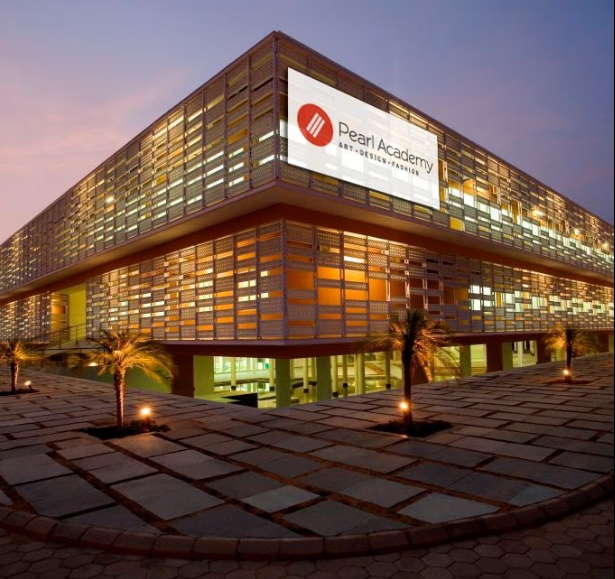
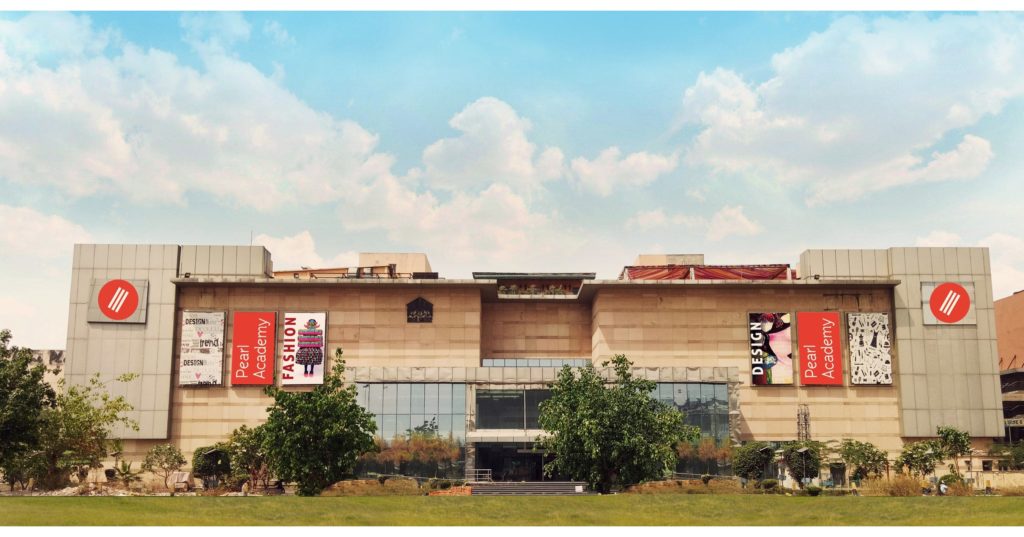
    Pearl Academy’s New Campus in West Delhi’s Rajouri Garden.

Pearl Academy

  1. Year of establishment

1993, 28 years of legacy

  1. Which university are they affiliated to? (NA)
  2. About campuses

We have 5 running campuses- Delhi west, Delhi South, Mumbai, Bengaluru and Jaipur.

  • There is no differentiation in terms of placements. Any job openings are made equally available to all campuses.
  • All our campuses are multidisciplinary, well equipped with world class infrastructure, slick classrooms, technical laboratories, and inspiring wide collaborative spaces.

Highlights of infrastructure/facility at campus?

Delhi west Campus –

Delhi has two campuses: in Naraina and Rajouri Garden. The Naraina campus is fully equipped with world class infrastructure. It has been the launch pad for design, fashion,

business and media professionals for the last 25 years. The Rajouri Campus is 100,000 sq ft. and is designed around the needs of design students, providing them with a

contemporary architectural canvas that is permeated with slick classrooms and wide collaborative spaces perfect for the 21st century learner.

A-21/13, NARAINA INDUSTRIAL AREA, PHASE II, NEW DELHI

EROS BUILDING DISTRICT CENTRE, RAJOURI GARDEN, NEW DELHI

Link: https://pearlacademy.com/academics/centers/delhi-west/

Mumbai Campus

The Mumbai Centre with its state-of-the-art labs for media, fashion, product and interiors have ensured a world class learning experience for students. Located right in the centre of

bustling Mumbai makes it a great place to get ready for the creative industries. The Mumbai Campus has won accolades like, ‘Mid Day Excellence in Education Awards 2017’,

‘Best Upcoming Design Institute in Mumbai’ award at ‘Brands Academy Education Excellence Awards’ 2014 and Bronze Award under ‘Emerging Design School Category’ at

The Edutainment Awards, 2016.

SM CENTRE, ANDHERI KURLA ROAD, ANDHERI EAST, MUMBAI

https://pearlacademy.com/academics/centers/mumbai/

Jaipur Campus

The Jaipur Centre has been awarded as one of the most beautiful college campuses in

India by India Today, 2016 and has also won ‘Best Learning Building’ Award at the World Architecture Festival Awards, 2009. It’s spread over 3.28 acres and has state-of-the-art

infrastructure which includes world class fashion, interiors, jewellery & gemmology labs, making it the ideal place to learn the nuances of fashion and design. The Centre has

hosted the 14th International Conference of the International Foundation for Fashion Technology Institutes in 2012.

Affiliated to Rajasthan ILD Skill University for B.Voc Degree

SP-38 A, RIICO INDUSTRIAL AREA, DELHI ROAD, KUKAS, JAIPUR

https://pearlacademy.com/academics/centers/jaipur/

Delhi South Campus

Located in the cultural hub of the capital city, Pearl Academy’s new campus in South Delhi offers a plethora of opportunities to students. The campus is very well connected to the prime locations and provides the perfect environment to creative aspirants. This campus houses state-of-the-art labs like Sewing & Cutting, Printing & Embroidery

and Make-up. It has a well-stocked Library and Resource Centre along with Design & Drawing Studios, Pattern-Making Studios and more. It’s surrounded by renowned export houses and studios of fashion designers.

Address:

Lotus Tower, Community Centre, New Friends Colony, New Delhi – 110025

Link: https://pearlacademy.com/academics/centers/delhi-south/

Bengaluru

Pearl Academy’s new campus in Bengaluru exemplifies the true spirit of the city. Located centrally at the city’s hub of handicrafts, it provides students the perfect space to get inspired by the start-up culture, IT, entertainment and business industries. It has a new age building with well equipped labs and facilities.

Address:

Pearl Academy, No.31, Residency Road, Next to Opera House, Opposite to the Gateway Hotel.

Bengaluru- 560025

Link: https://pearlacademy.com/academics/centers/bengaluru/

  1. What program do they offer? Annual intake?

Please click on Link : https://pearlacademy.com/academics/courses/

  1. Key highlights

A Student should apply to Pearl Academy for following reasons:

  • With a legacy of 28 years in contributing to creative education in spheres such as design, fashion, business and media; offering more than 40 courses.
  • We are recognized by the industry and hence, Pearl Academy has been awarded the Best Design Institute in India by ASSOCHAM for the last four years (2016,2017,2018 & 2019). Pearl Academy also has been consecutively ranked as the best private fashion college in India by India Today, The Week and Outlook
  • Our Curriculumis regularly updated with changes in the industry & provides a holistic approach to all students with best of the faculty from the industry with us
  • Pearl Total Learning System(PTLS) is an academic differentiator which ensures holistic development of every student as it includes: Beyond the curriculum where we provide multidisciplinary/inter-disciplinary collaborative experiences & open spaces to develop new learning skills like Pow-wow, active citizenship etc Industry Circuit which includes involvement of industry right from designing curriculum, Live Industry Projects, Masterclasses etc. International exposure to student through exchange programs, experience lab and beamed classes with international students and faculty mentors. Career Mentoring provides students professional development and life skills, trainings, exposure to HR summits, interview preparations, assess professional competencies and help students develop a career path for themselves
  • We offer extensive scope for global exposurethrough exchange Programmes across Europe & Australia on 100% Scholarship to all enrolled Students
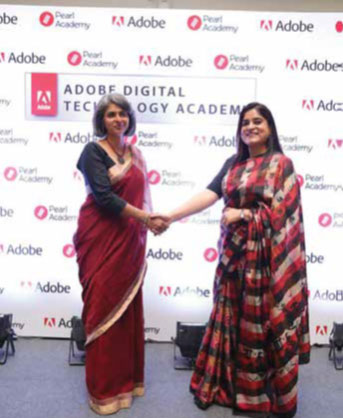
  • We have strong Industry Alliances with FDCI, IIID, ADI, Amazon, Adobe etc wherein we offer Industry exposureto our Students with Live Industry Projects & Masterclasses with Industry experts
  • We offer opportunities to earn International Degree to our UG Students from prestigious universities in the world like Torrens University Australia, Manchester Metropolitan University, University of Derby, Nottingham Trent University, UK and University for Creative Arts, UK
  • Our Placements were at 99% for AY 2020 which includes leading names in the industry
  • We have a strong Alumni networkwho are notable designers in the industry today like Mandira Wirk, Nikhil Mehra, Pallavi Dhyani etc  
  • Our campuses are very safe and have been awarded with BV safety shield for hygiene
  • We are the only creative education Institute in India to have been awarded QS I-Gauge badge for best practices in Digitization of education infrastructure.

Admission Process – https://pearlacademy.com/admissions/dates-and-guidelines/

How to Apply?

Online application– You can apply on our website (www.pearlacademy.com).

The application fee is Rs.1500. For more information pls visit-https://pearlacademy.com/admissions/dates-and-guidelines/

What is the entrance exam pattern? Any sample Paper? – You can prepare for DAT on the below link and access sample papers-

https://designprep.pearlacademy.com/?_ga=2.117704329.1081593450.1576039070-950507817.1510298763

Important Dates –

Feb Cycle

  • Examination Dates – 5 – 6 February 2021, Mode of Exam – Online
  • Last date to apply – 1 February 2021

April Cycle

  • Examination Dates – 30April – 1 May 2021*
  • Mode of exam – Online/Offline as per government permission.
  • Last date to apply – 26 April 2021

*Note: Dates may be changed if it gets coincide with board exam or any national level entrance test

For more information log on to- https://pearlacademy.com/admissions/dates-and-guidelines/

  1. Eligibility Criteria
  • For 3 Year / 4 Year UG course: 10+2, in any discipline.
  • For 2 Year PG Course / 11 Months PG program: Graduate in any discipline from a recognized university.
  • For 11 Months Professional Program: 10+2 or equivalent

Is there in reservations in the seats? if yes what is the split?

The selection is based on merit basis, you need to qualify the entrance exam in order secure a seat in Pearl.

  1. Fee structure

Please click on Link : https://pearlacademy.com/fee-structure/

  1. International affiliation

We provide opportunities to our students to learn the best global practices through several international platforms such as exchange programs, summer programs, art fests, workshops and many more. Our extensive international tie-ups facilitate over 300 students each year to participate in reciprocal exchanges, international conferences, study tours and summer school programs. In 2019 369+ students went for exchange.

Some of our prestigious partners are Torrens University in Australia, University of Derby, UK, MMU, NTU, NABA in Milan, IED, University for creative Arts in UK etc.

For more details on Courses, Eligibility criteria and important information pls click the link below

Link: https://pearlacademy.com/international-transfer/

  1. Global exposure

Pearl Academy has established extensive international tie-ups with eminent institutions for student/faculty exchange, training and consultancy services, international conferences, and joint projects. Its vision embodies a commitment to global network and collaborations and sharing of best practices for mutual growth and benefits.

Types of International exposure:

  • 8-12 weeks or full semester exchange programmes
  • International Summer School programmes
  • Study Abroad programmes
  • Participation in global events in international Universities & partner institutions
  • International Study Module (4 weeks)
  • Opportunities for international internships
  • Collaborative Projects
  • Masterclass by renowned international experts and faculty from partner institutions
  • Scholarships for exchange program
  • Internationally academic quality partner for course curricula design and faculty training
  1. Placement record for recent years

Pearl has an excellent record of 99% placements last year.  Placements and internships are handled through a centralized Career Services Department. Various brands from industry participate regularly in the campus placements and internships.

Testimonials from recruiters and students 

https://pearlacademy.com/life-at-pearl/student-work/  

  1. Industry Interaction
  • Master classes with Industry veterans
  • Industrial visits for exposure and learning
  • Senior Industry members are part of advisory board
  • Coveted internships with best brands
  • Industry mentors for projects

ABOUT IIAD

Indian Institute of Art and Design in collaboration with Kingston University, London offers new-age design education to its students. The studio-based learning and hands-on Industry experience offers students the knowledge and exposure required to understand how the creative  industries function. Design is an intellectual subject that requires strong creative, visual, logical and critical thinking abilities and keeping that in mind, IIAD ensures a student-teacher ratio of 15:1 so that each student receives equal attention and assistance.

AFFILIATIONS

IIAD offers all its BA (Hons) degree programmes and MA* degree programmes in collaboration with Kingston School of Art, Kingston University, London. The courses at IIAD meet the quality standards and requirements of Kingston University. Both institutions share their resources and best practices for the development of the curriculum and the delivery of the courses. The academic collaboration with Kingston School of Art is the founding stone of the design pedagogy being taught at IIAD. It is known to be a pioneer in art and design education since the 1870s and has helped evolve the Institute’s comprehensive curriculum since inception. To help you understand the nature of this relationship and its benefits to the students, Kingston University has published a document answering queries from students and their families.

Are the degrees offered by IIAD recognised in India?

Yes, the degree offered at IIAD are recognised nationally and internationally. Apart from the degree offered by Kingston University, London, IIAD also offers a B.Voc degree in collaboration with Lingaya’s University which is UGC recognised. The degrees provided by IIAD can help the students in:

  • Applying at international institutes/universities for further education
  • Applying for jobs globally
  • Applying at UGC recognised universities in India for further education
  • Applying for Government jobs in India after completion of their degree programme

FEE AND SCHOLARSHIP

Students who successfully complete the iDAT Entrance Test will be eligible to apply for the Scholarship. The Scholarship form will be made available along with the offer letter.

Cycle – April / May 2020

Announcement Details
Forms Available from   September 2019
Exam Centers and Dates   Online 
Friday 24th April, Saturday 25th April

For Undergraduate programmes : The IIAD Entrance Examination comprises the following parts/rounds based on the programme of interest. For Fashion Design, Communication Design and Interior Architecture & Design Applicants: iDAT – IIAD Design Aptitude Test

  • Part A – Written Test
  • Part B – Studio Simulation

 Part A – Written Test IIAD’s Design Aptitude Test (written) tests the applicants’ logical reasoning, creative thinking and visual aptitude. This is a written exam of 2 hours 30 mins. Students who appear in the written iDAT must also appear for a Studio Simulation at the IIAD campus in New Delhi. Part B – Studio Simulation ‘Studio simulation test’ is a two-hour activity in which a group of 10-15 students are given a brief along with the material. Candidates are required to create a 3D model using that material under the supervision of the faculty. They will be judged on the basis of teamwork, creative thinking, innovation & problem-solving skills.  

For Fashion Business Management Applicants: iMAT – IIAD Management Aptitude Test

  • Part A – Written Test
  • Part B – Personal Interview

IIAD’s Management Aptitude Test (iMAT) tests the applicants’ language, logical reasoning and analytical thinking. This is a written exam of 2 hours. Students who appear in written iMAT must also appear for a Personal Interview at the IIAD campus in New Delhi.   For Postgraduate programmes : The IIAD Entrance Examination comprises the following parts/rounds based on programme of interest.   For Fashion Design iDAT – IIAD Design Aptitude Test


  • Part A – Written Test
  • Part B – Personal Interview

iDAT is IIAD’s Design Aptitude Test which will test applicants’ logical reasoning, creative thinking and visual aptitude. This is a written exam of 2 hours 30 mins. Students who appear in the written iDAT must also appear for a Personal Interview at the IIAD campus in New Delhi.   For Fashion Business Management Applicants: iMAT – IIAD Management Aptitude Test

  • Part A – Written Test
  • Part B – Personal Interview

iMAT is IIAD’s Management Aptitude Test which will test applicants’ language, logical reasoning and analytical thinking. This is a written exam of 2 hours. Students who appear in written iMAT must also appear for a Personal Interview at the IIAD campus in New Delhi. The Sample Papers can be obtained upon successful completion of the Application Form.

B.A. (Hons.) Communication Design

The BA Communication Design programme (validated by Kingston University) is delivered through a mix of project work, group work, lectures, seminars and assignments. The program offers a common introductory experience during the first year of specialisation, followed by two years of selected and more specialised study driven by interests and preferences. The programme concludes with a Major Design Project in the last semester of the final year, this is an amalgamation of the specialisation and is defined by student’s own path as a future designer.

B.A. (Hons.) Interior and Architecture Design

At the intersection of architecture, interior and experience design, the Interior Architecture and Design programme provides a multi-disciplinary approach to transforming existing spaces and places.  In increasingly Urban Environments, the emphasis on the design and working of a building, inside out, has gained tremendous importance. The programme focuses on examining existing structures and transforming their interior through relevant design interventions and renovations that give existing buildings a new life.  

Unlike courses in interior design and decoration, the Interior Architecture programme focuses on spatial design and detailing, adaptive reuse and retrofitting as well as architectural addition and refurbishment.  

The programme addresses a wide range of spaces, from domestic to retail, institutional to  commercial and set/production design to issues of conservation. Whether designing a structure, situation or event, the interior architect responds to how society interacts with, and inhabits space.

B.A. (Hons.) Fashion Design

Fashion Design as a discipline has evolved from being a whimsical, wearer-led, phenomenon to an industry where designers and labels establish and guide customer preferences. A formal degree in Fashion Designing is ideal for students with a penchant for the creative fields and a desire to explore their artistic and technical skills in in an industry valued north of $3 trillion globally. The programme will help students explore their creative identity and refine it further as they unpack the myriad layers of the discipline. Fashion Design being a practical discipline demands rigorous hands-on exposure with a mature awareness of the complexities of the world of Fashion. Students graduating from the programme will be able to use design thinking and creative problem-solving strategies to create appealing, sustainable and responsible fashion for a rapidly evolving industry.

TRANSFER TO IIAD

IIAD accepts applications for transfer to IIAD for the design programme (in either Fashion Design, Communication Design or Interior Architecture & Design) from students who have successfully completed previous year(s) of their design degree/diploma programme from a nationally or internationally recognized Design Institute.

Schedule a free counselling session WhatsApp WhatsApp Enquiry