*Admission information* for the academic year *2021* :

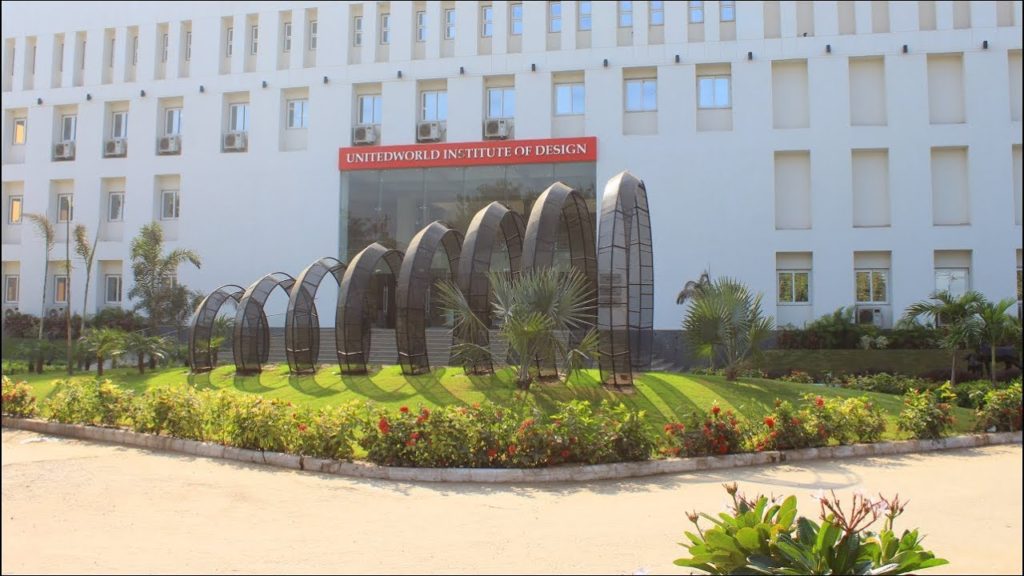
*Unitedworld Institute of Design (UID)* is one of the premier Design institutes of India. A constituent college of Karnavati University, we aim to create globally sought after professionals who can exhibit
their creativity and trigger novel trends.
UID’S pursuit for excellence has made its name gleam with
an extraordinary record of success in a short span.

_*Option # 1 ::*_

*Undergraduate Programs at Offer:*

UG (B. Design)
1) Product Design
2) Automobile and Transportation Design
3) Interaction Design
4) Fashion Design
5) Lifestyle Accessory Design
6) Visual Communication (Graphics)
7) Animation and Motion Graphics
8) Interior & Furniture Design

_*Fee Structure*_ :
Tuition fee of Rs. 2,25,000/- Per Semester * 8 Semesters
Total Fees = Rs 18.00 Lakhs

_*Option # 2 ::*_

*B.Design- Global Design Program*
Duration: It is a 4 Years full-time-degree course comprising of 8 semesters of 6 months each

_*Fee Structure-*_ Tuition fee = Rs. 3,50,000/- Per Semester * 8 Semesters
Total Fees = Rs 28.00 Lakhs

*Degree- B. Design

Course Breakup:

*Semester 1-*_ at UID Ahmedabad, India
*Semester 2_* – at UID Ahmedabad, India
*Semester 3-*_ at Swinburne University, Melbourne, Australia
*Semester 4-*_ at UID Ahmedabad, India
*Semester 5-*_ at Naba, Milan, Italy
*Semester 6-*_ at UID Ahmedabad, India
*Semester 7-*_ at Nottingham Trent University, United Kingdom
*Semester 8-*_ at UID Ahmedabad, India

_*Option # 3 ::*_

*INTEGRATION MASTER OF DESIGN (5 YEARS) PROGRAMME*
Duration: It is a 5 Years full-time-degree course comprising 10 semesters of 6 months duration each.
Programme Highlights:
Two qualifications in one i.e. B. Design and M. Design. Unique and differentiated graduate profile

_*Fee Structure*_ :
Tuition fee = Rs. 2,25,000/- Per Semester * 10 Semesters
Total Fees = Rs. 22.50 Lakhs

_*Option # 4 ::*_

*Post Graduate Program* :

_*PG (M. Design)*_
1) Industrial Design
2) Visual Experiential Design
3) Interior and Experience Design
4) Fashion Design
5) Fashion Styling and Communication
6) Textile and Knitwear Design

_*Fee Structure*_ :
Tuition fee = Rs. 2,00,000/- Per Semester * 4 Semesters
Total Fees = Rs. 8,00,000/-

In case of further information you can reach our Admission Team at *9821-651-399 | 9910-60-9749

Join Exclusive Crash Course Batch at Pahal Design. Starting from 15th April onwards….

The National Institute of Fashion Technology is a leader in fashion education with the ability to integrate knowledge, traditional arts, contemporary thought, academic freedom, innovations in design & technology and creative thinking to continuously upgrade its curriculum to address the changing needs of the industry. Its history of more than three decades at the pinnacle of fashion education stands as a testimony to its focus on core values where academic excellence has been nurtured. The institute has stood as a beacon of industry-academia engagement and a key enabler in developing competent professionals.


The National Institute of Fashion Technology (NIFT), set up in 1986 under the Ministry of Textiles, Government of India, is a Statutory Institute governed by the NIFT Act 2006. Bringing in a wide range of aesthetic & intellectual orientations, the early instructors included leading progressive scholars from Fashion Institute of Technology, New York, USA.

Academic inclusiveness has been the key thought in the expansion plans of the institute. NIFT, today, has spread its wings across the length and breadth of the country. Through its 16 professionally managed campuses, National Institute of Fashion Technology provides an excellent environment to its students from different parts of the country to achieve their highest potential through the programmes offered. Since the early years of its inception, the institute has provided a firm foundation in fashion education in the domains of Design, Management and Technology. Since then, NIFT has continued to set and achieve higher academic standards.

NIFT Courses:

  1. B.Des (Bachelor of Design)
  2. M.Des (Master of Design)
  3. B.Ftech (Bachelor of Fashion Technology)
  4. M.Ftech (Master of Fashion Technology)
  5. MFM (Master of Fashion Management)

NIFT Exam Pattern 2020: Creative Ability Test (CAT)

NIFT CAT exam pattern is such that candidates are evaluated on the basis of their intuition skill, power of observation, innovation in the development of a concept as well as design ability of the candidate. One of the most important aspects of NIFT CAT exam is that it tests the creative as well as innovative use of colour and illustration skills of aspirants.

NIFT CAT is a paper-pencil based exam and it is of three hours duration.

NIFT Exam Pattern 2020: General Ability Test (GAT)

Candidates seeking NIFT admissions in BDes programmes offered at NIFT need to appear for GAT exam. This test comprises of the below-mentioned sections:

  • Quantitative Ability
  • Communication Ability
  • English Comprehension
  • Analytical Ability
  • General Knowledge and Current Affairs

The duration of NIFT GAT is 120 minutes for BDes course. While formulating the merit list for BDes course admissions 30% weighatge is allotted to GAT section of NIFT entrance exam.

NIFT CAT Exam Pattern for BDes Admissions

In NIFT exam pattern 2020 for BDes admissions, candidates need to appear for CAT. NIFT CAT exam paper has three questions which candidates need to attempt in three hours duration. In this design entrance exam, candidates are evaluated on the below mentioned parameters:

  • Design ability
  • Intuitive ability
  • Observation skills
  • Concept development skills
  • Creative use of colour
  • Illustration skills

NIFT Exam Pattern for Situation Test

Candidates who have been shortlisted for NIFT BDes admissions on the basis of their written test need to appear for NIFT Situation Test 2020 wherein their “material handling and innovative ability” will be tested.

Here, candidates will be evaluated on “on Space Visualization, Innovative and creative use of given material, composition of elements, colour scheme, construction skill , finesse of the model and overall presentation etc. These parameters will be checked with the write up explaining the concept / idea behind the model constructed. The weightage of the write up is 30%. Since the medium of teaching in NIFT is English, the write-up will be in English language.

  1. What is the marking scheme for NIFT entrance exam? NIFT exam marking scheme varies for CAT and GAT. In NIFT CAT exam, candidates are evaluated out of 100 marks. In GAT exam, aspirants are awarded for one mark for every correct answer and 0.25 marks are deducted for each wrong answer selected by them.
  2. How can I prepare for NIFT CAT? Candidates need to go through the detailed exam pattern as well as syllabus for NIFT CAT and thereafter formulate a preparation strategy. In NIFT CAT exam, aspirants are evaluated on the basis of their power of observation, innovation and design ability. Candidates can go through NIFT entrance exam preparation to have a plan in place when preparing for this design entrance exam.
  3. How can I prepare for NIFT GAT? NIFT GAT comprises of multiple choice questions that aspirants need to solve in order to crack the exam. Questions in NIFT GAT are from subjects such as Quantitative Ability, Communication Ability, English Comprehension, Analytical Ability, General Knowledge and Current Affairs.
  4. Is there any negative marking in NIFT entrance exam? There is no negative marking in NIFT CAT exam. However, for GAT exam, 0.25 marks will be deducted for each wrong answer selected by a candidate. 
  5. What is the syllabus for NIFT exam? National Institute of Fashion Technology does not release any syllabus for NIFT exam. However, candidates can develop an idea of NIFT entrance exam syllabus here.
  6. How many questions are asked in NIFT CAT? In NIFT CAT, candidates have to attempt three drawing questions.
  7. How many questions are asked in NIFT GAT? The exam pattern for NIFT GAT varies from one course to the other. The total number of questions asked in NIFT GAT are mentioned below:
  • BDes: 100 questions
  • BFTech: 150 questions
  • MDes: 120 questions
  • MFTech: 150 questions
  • MFM: 150 questions

Pahal Design Gwalior

D/2, Ground Floor, Basant Vihar Colony, Gwalior

Contact Person: Kanika Jain

Mobile Number: 93540-52529

Email : corporate@pahaldesign.com

ngg_shortcode_6_placeholder 


ABOUT IIAD

Indian Institute of Art and Design in collaboration with Kingston University, London offers new-age design education to its students. The studio-based learning and hands-on Industry experience offers students the knowledge and exposure required to understand how the creative  industries function. Design is an intellectual subject that requires strong creative, visual, logical and critical thinking abilities and keeping that in mind, IIAD ensures a student-teacher ratio of 15:1 so that each student receives equal attention and assistance.

AFFILIATIONS

IIAD offers all its BA (Hons) degree programmes and MA* degree programmes in collaboration with Kingston School of Art, Kingston University, London. The courses at IIAD meet the quality standards and requirements of Kingston University. Both institutions share their resources and best practices for the development of the curriculum and the delivery of the courses. The academic collaboration with Kingston School of Art is the founding stone of the design pedagogy being taught at IIAD. It is known to be a pioneer in art and design education since the 1870s and has helped evolve the Institute’s comprehensive curriculum since inception. To help you understand the nature of this relationship and its benefits to the students, Kingston University has published a document answering queries from students and their families.

Are the degrees offered by IIAD recognised in India?

Yes, the degree offered at IIAD are recognised nationally and internationally. Apart from the degree offered by Kingston University, London, IIAD also offers a B.Voc degree in collaboration with Lingaya’s University which is UGC recognised. The degrees provided by IIAD can help the students in:

  • Applying at international institutes/universities for further education
  • Applying for jobs globally
  • Applying at UGC recognised universities in India for further education
  • Applying for Government jobs in India after completion of their degree programme

FEE AND SCHOLARSHIP

Students who successfully complete the iDAT Entrance Test will be eligible to apply for the Scholarship. The Scholarship form will be made available along with the offer letter.

Cycle – April / May 2020

Announcement Details
Forms Available from   September 2019
Exam Centers and Dates   Online 
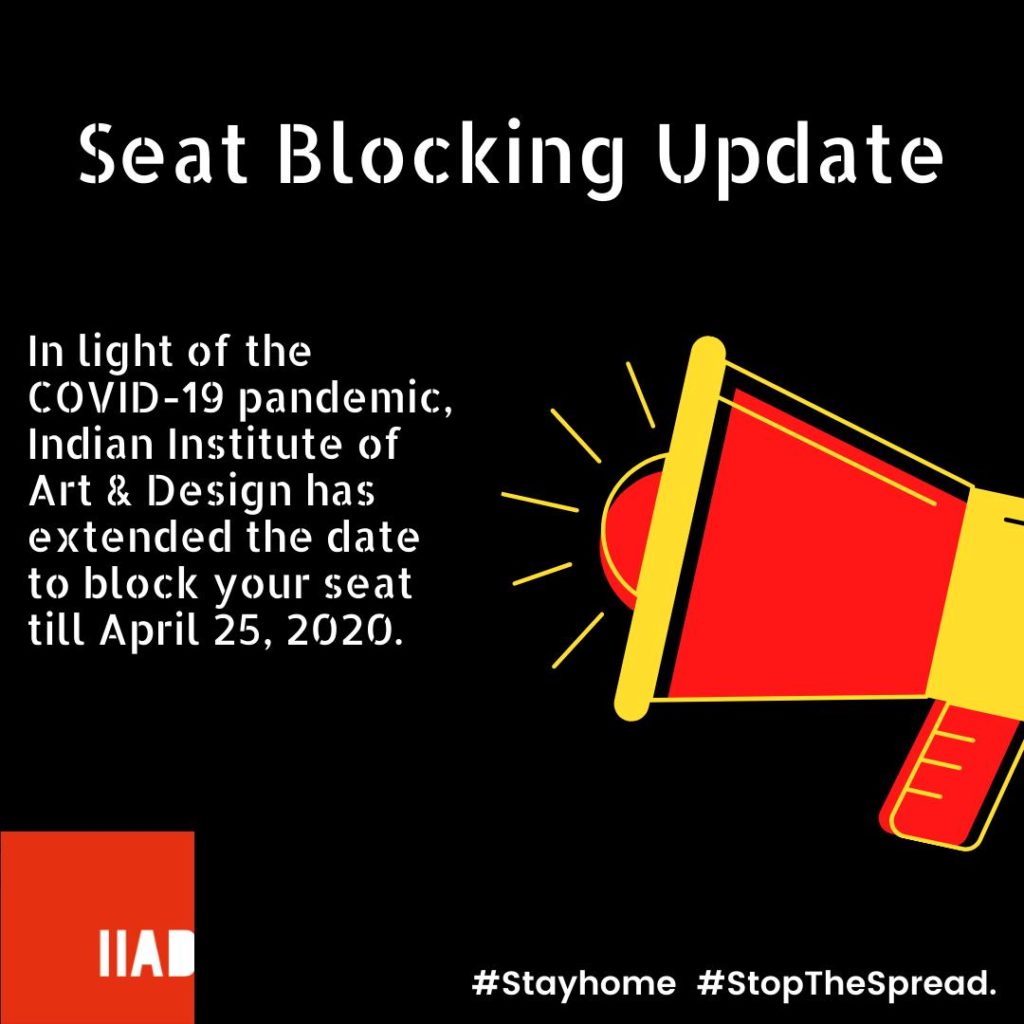
Friday 24th April, Saturday 25th April

For Undergraduate programmes : The IIAD Entrance Examination comprises the following parts/rounds based on the programme of interest. For Fashion Design, Communication Design and Interior Architecture & Design Applicants: iDAT – IIAD Design Aptitude Test

  • Part A – Written Test
  • Part B – Studio Simulation

 Part A – Written Test IIAD’s Design Aptitude Test (written) tests the applicants’ logical reasoning, creative thinking and visual aptitude. This is a written exam of 2 hours 30 mins. Students who appear in the written iDAT must also appear for a Studio Simulation at the IIAD campus in New Delhi. Part B – Studio Simulation ‘Studio simulation test’ is a two-hour activity in which a group of 10-15 students are given a brief along with the material. Candidates are required to create a 3D model using that material under the supervision of the faculty. They will be judged on the basis of teamwork, creative thinking, innovation & problem-solving skills.  

For Fashion Business Management Applicants: iMAT – IIAD Management Aptitude Test

  • Part A – Written Test
  • Part B – Personal Interview

IIAD’s Management Aptitude Test (iMAT) tests the applicants’ language, logical reasoning and analytical thinking. This is a written exam of 2 hours. Students who appear in written iMAT must also appear for a Personal Interview at the IIAD campus in New Delhi.   For Postgraduate programmes : The IIAD Entrance Examination comprises the following parts/rounds based on programme of interest.   For Fashion Design iDAT – IIAD Design Aptitude Test


  • Part A – Written Test
  • Part B – Personal Interview

iDAT is IIAD’s Design Aptitude Test which will test applicants’ logical reasoning, creative thinking and visual aptitude. This is a written exam of 2 hours 30 mins. Students who appear in the written iDAT must also appear for a Personal Interview at the IIAD campus in New Delhi.   For Fashion Business Management Applicants: iMAT – IIAD Management Aptitude Test

  • Part A – Written Test
  • Part B – Personal Interview

iMAT is IIAD’s Management Aptitude Test which will test applicants’ language, logical reasoning and analytical thinking. This is a written exam of 2 hours. Students who appear in written iMAT must also appear for a Personal Interview at the IIAD campus in New Delhi. The Sample Papers can be obtained upon successful completion of the Application Form.

B.A. (Hons.) Communication Design

The BA Communication Design programme (validated by Kingston University) is delivered through a mix of project work, group work, lectures, seminars and assignments. The program offers a common introductory experience during the first year of specialisation, followed by two years of selected and more specialised study driven by interests and preferences. The programme concludes with a Major Design Project in the last semester of the final year, this is an amalgamation of the specialisation and is defined by student’s own path as a future designer.

B.A. (Hons.) Interior and Architecture Design

At the intersection of architecture, interior and experience design, the Interior Architecture and Design programme provides a multi-disciplinary approach to transforming existing spaces and places.  In increasingly Urban Environments, the emphasis on the design and working of a building, inside out, has gained tremendous importance. The programme focuses on examining existing structures and transforming their interior through relevant design interventions and renovations that give existing buildings a new life.  

Unlike courses in interior design and decoration, the Interior Architecture programme focuses on spatial design and detailing, adaptive reuse and retrofitting as well as architectural addition and refurbishment.  

The programme addresses a wide range of spaces, from domestic to retail, institutional to  commercial and set/production design to issues of conservation. Whether designing a structure, situation or event, the interior architect responds to how society interacts with, and inhabits space.

B.A. (Hons.) Fashion Design

Fashion Design as a discipline has evolved from being a whimsical, wearer-led, phenomenon to an industry where designers and labels establish and guide customer preferences. A formal degree in Fashion Designing is ideal for students with a penchant for the creative fields and a desire to explore their artistic and technical skills in in an industry valued north of $3 trillion globally. The programme will help students explore their creative identity and refine it further as they unpack the myriad layers of the discipline. Fashion Design being a practical discipline demands rigorous hands-on exposure with a mature awareness of the complexities of the world of Fashion. Students graduating from the programme will be able to use design thinking and creative problem-solving strategies to create appealing, sustainable and responsible fashion for a rapidly evolving industry.

TRANSFER TO IIAD

IIAD accepts applications for transfer to IIAD for the design programme (in either Fashion Design, Communication Design or Interior Architecture & Design) from students who have successfully completed previous year(s) of their design degree/diploma programme from a nationally or internationally recognized Design Institute.

Schedule a free counselling session WhatsApp WhatsApp Enquiry